

A Olivia & Doudou learning journey
Help people find a way
How can pictures, maps and crossings help us connect places?
Turn a place into a map, add directions, notice natural and built features, then connect settlements with routes and crossings.
Begin the journeyAt your own pace.
Use one chapter at a time over several visits. Open the related notebook page only when it helps the conversation.
A discovery to listen for.
The child can match a feature to a symbol, explain a direction from the compass, and connect two places with a plausible route or crossing. Accept pointing, signing, words or an adult-supported drawing; revisit individual lesson checks when useful.
- 1
Start here
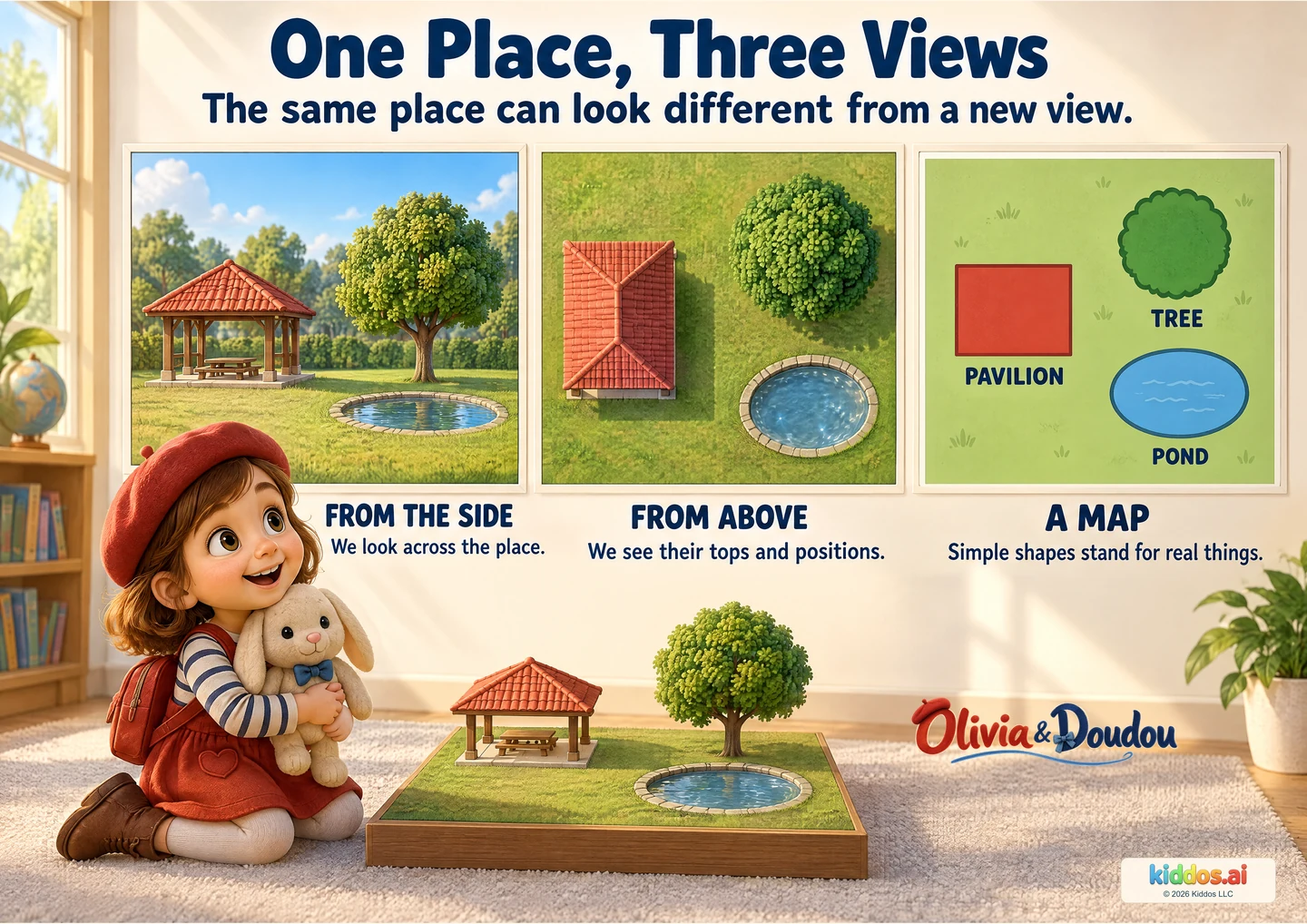
One Place, Three Views
What stays the same in the three pictures?
Match three features across a side view, a directly overhead view and a simple map of the same place.
Explore this lesson - 2
Build on your last discovery
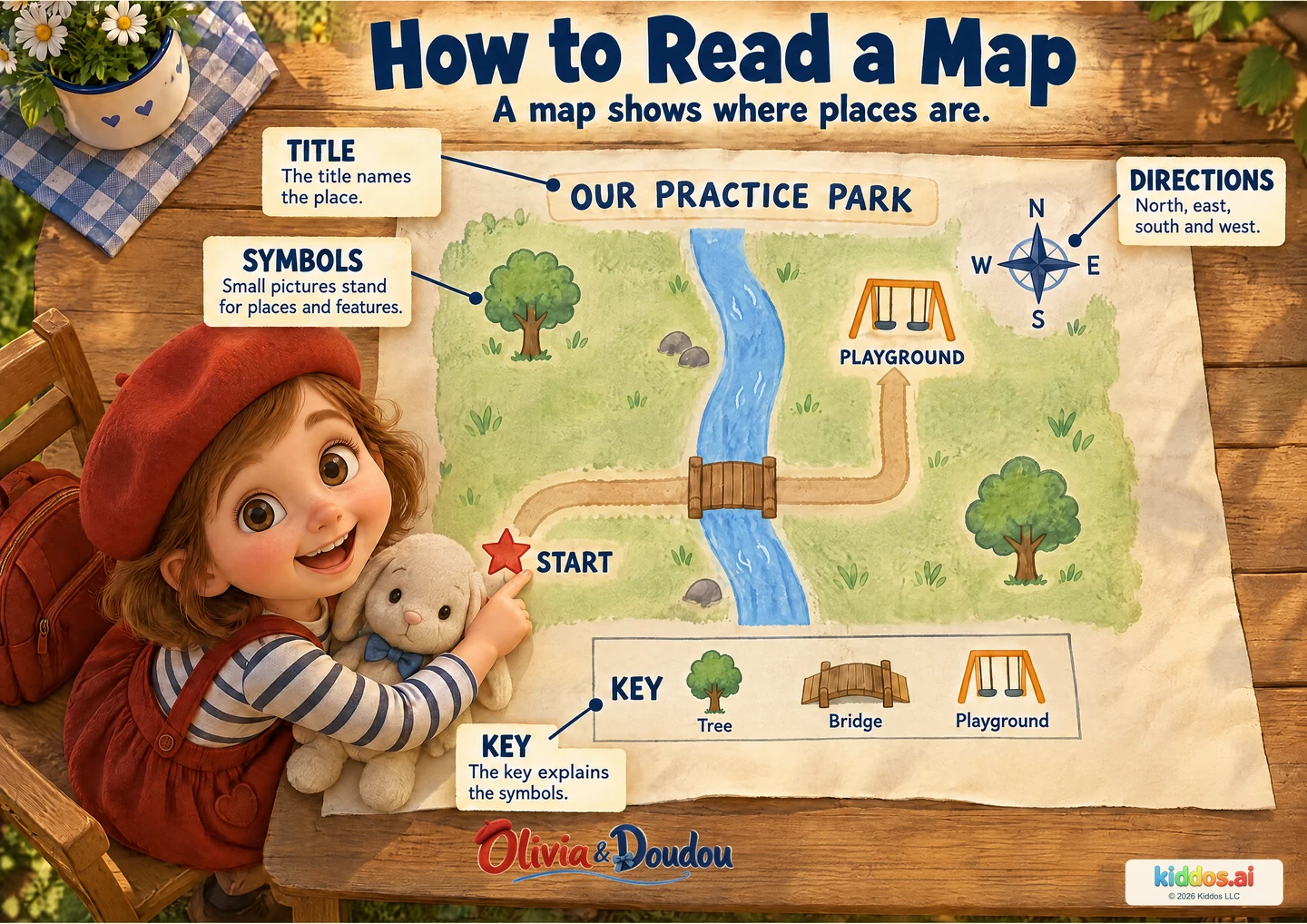
How to Read a Map
What does the title tell us?
Use a title, key and compass rose to interpret a simple map and follow a connected path.
Explore this lesson - 3
Build on your last discovery
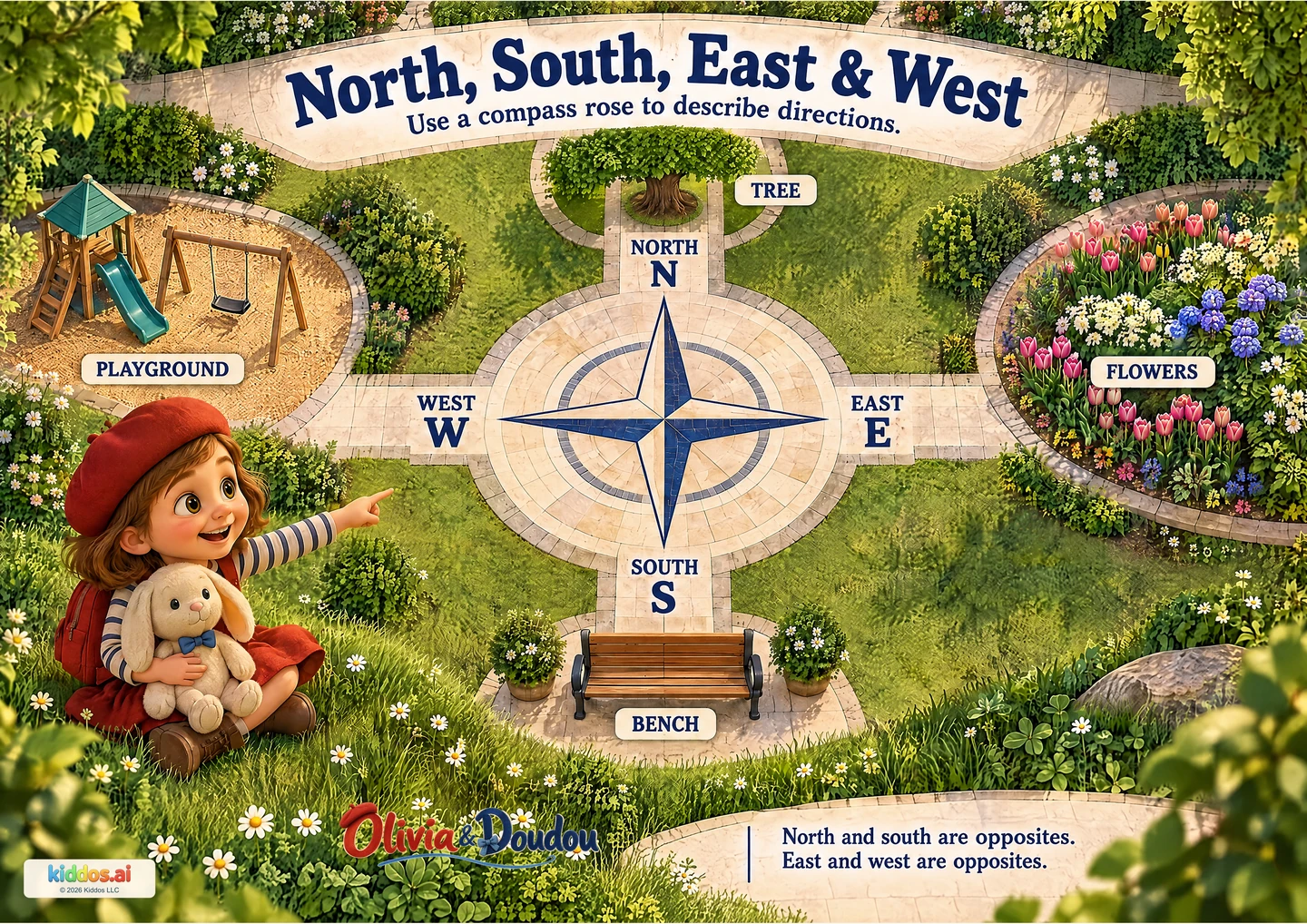
North, South, East & West
What is east of the compass?
Use four compass directions to describe the positions of places from one clear reference point.
Explore this lesson - 4
Build on your last discovery
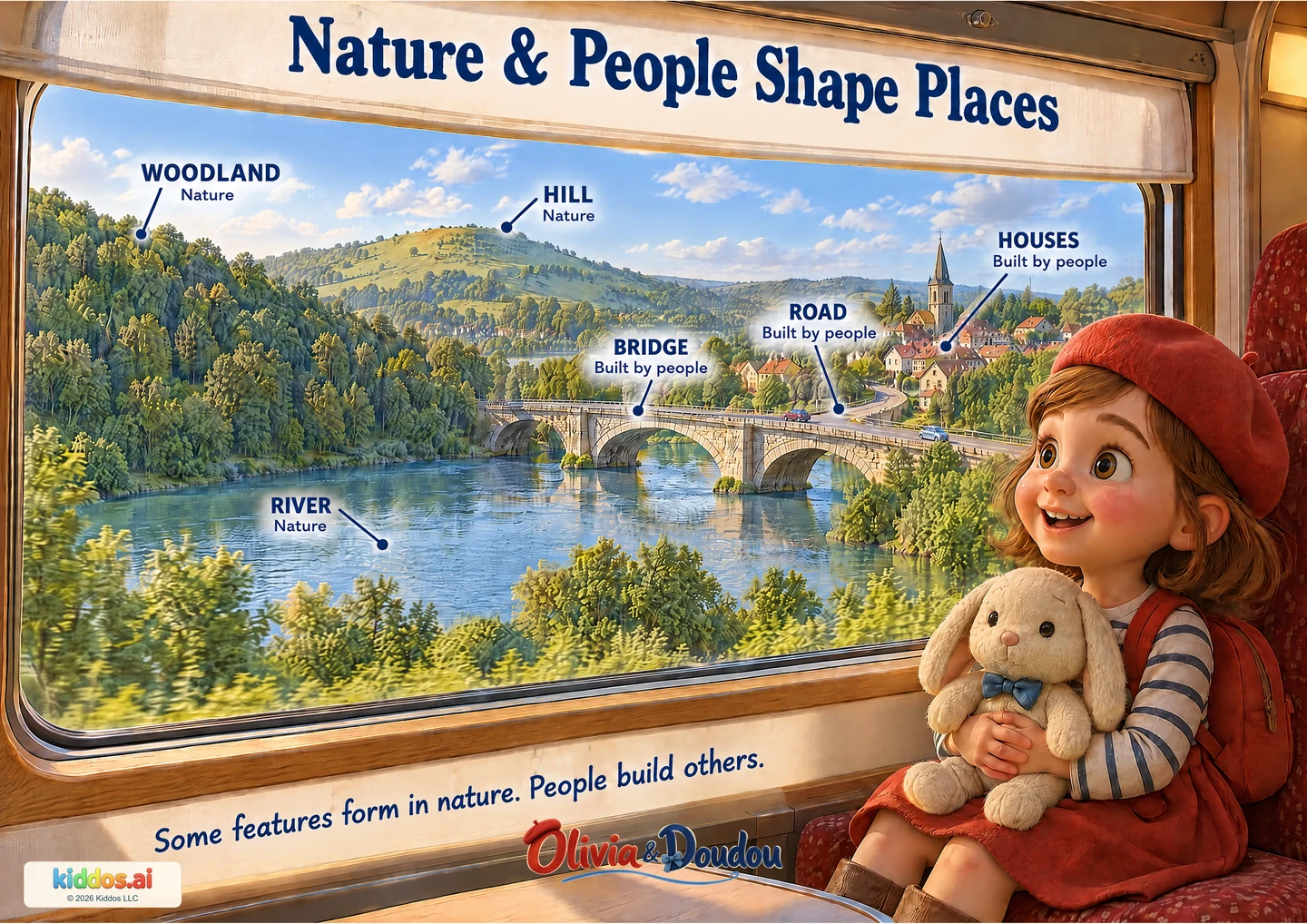
Nature & People Shape Places
Which labeled feature carries the road across the river?
Compare natural and human-built landscape features and describe how one built feature relates to nature.
Explore this lesson - 5
Build on your last discovery
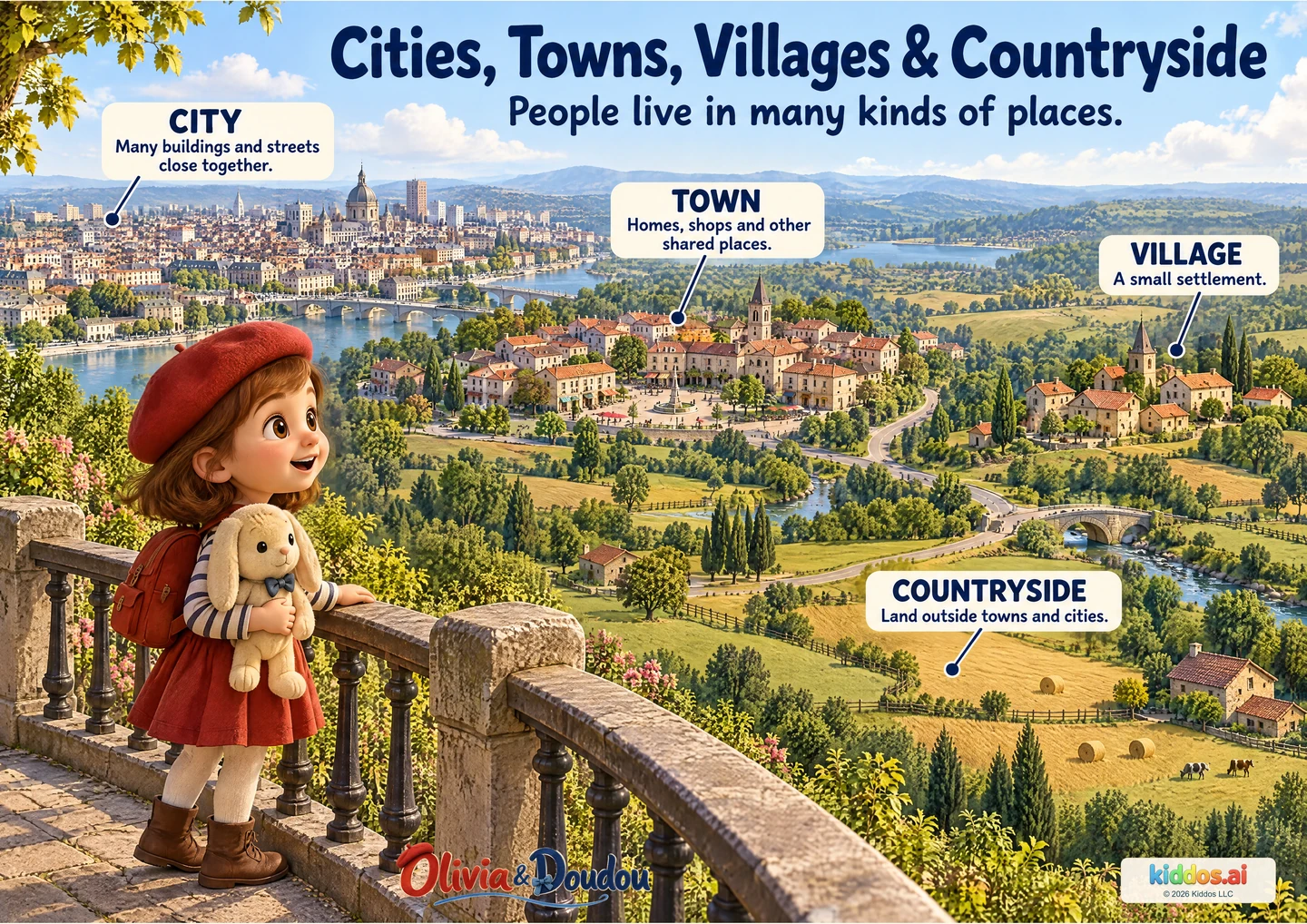
Cities, Towns, Villages & Countryside
What looks different between the city and the village here?
Compare visible settlement patterns and describe a connection between built places and surrounding countryside.
Explore this lesson - 6
Build on your last discovery
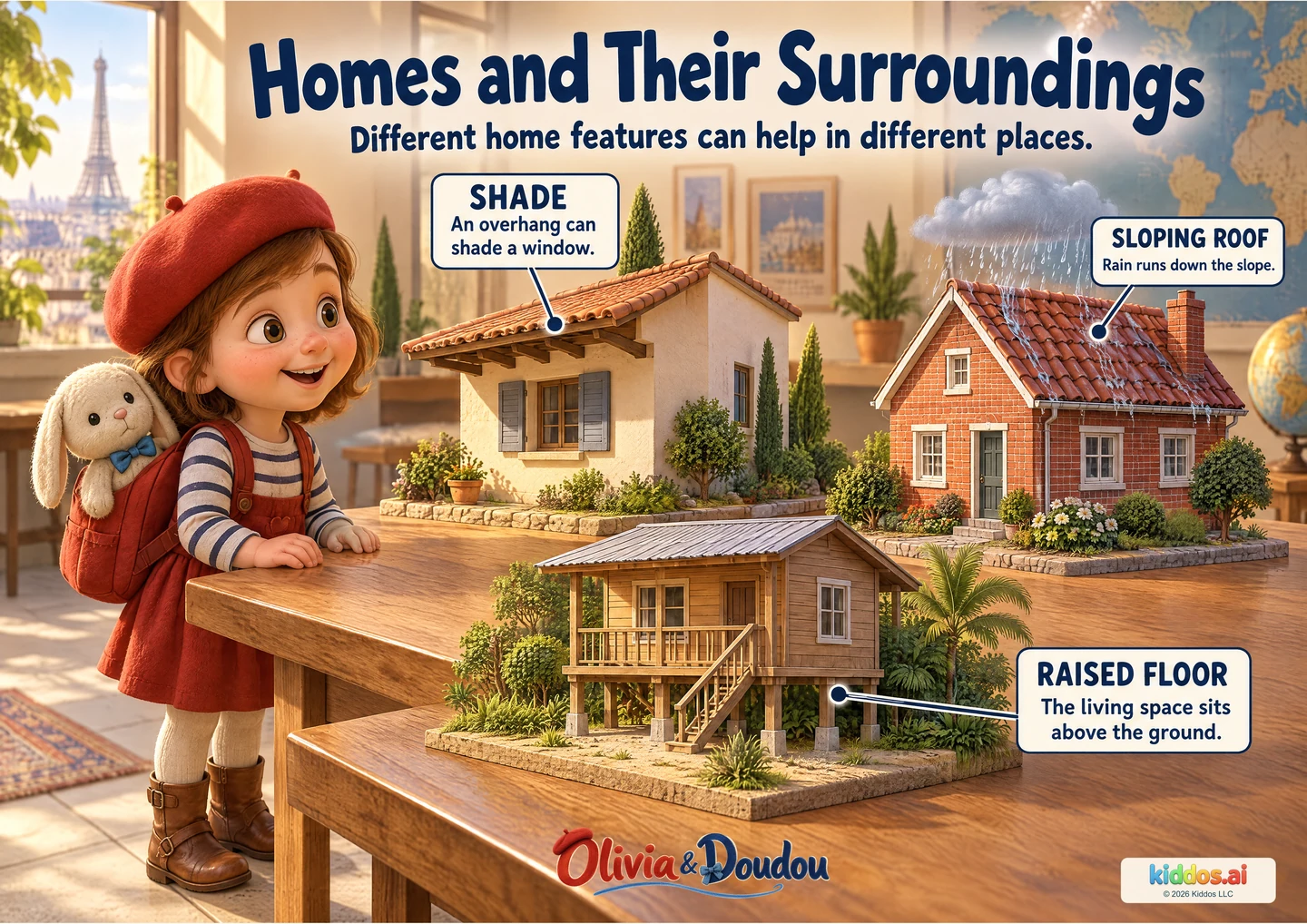
Homes and Their Surroundings
What is making shade over this window?
Explain one visible relationship between a home feature and its surroundings, without assigning one house type to an entire country.
Explore this lesson - 7
Build on your last discovery
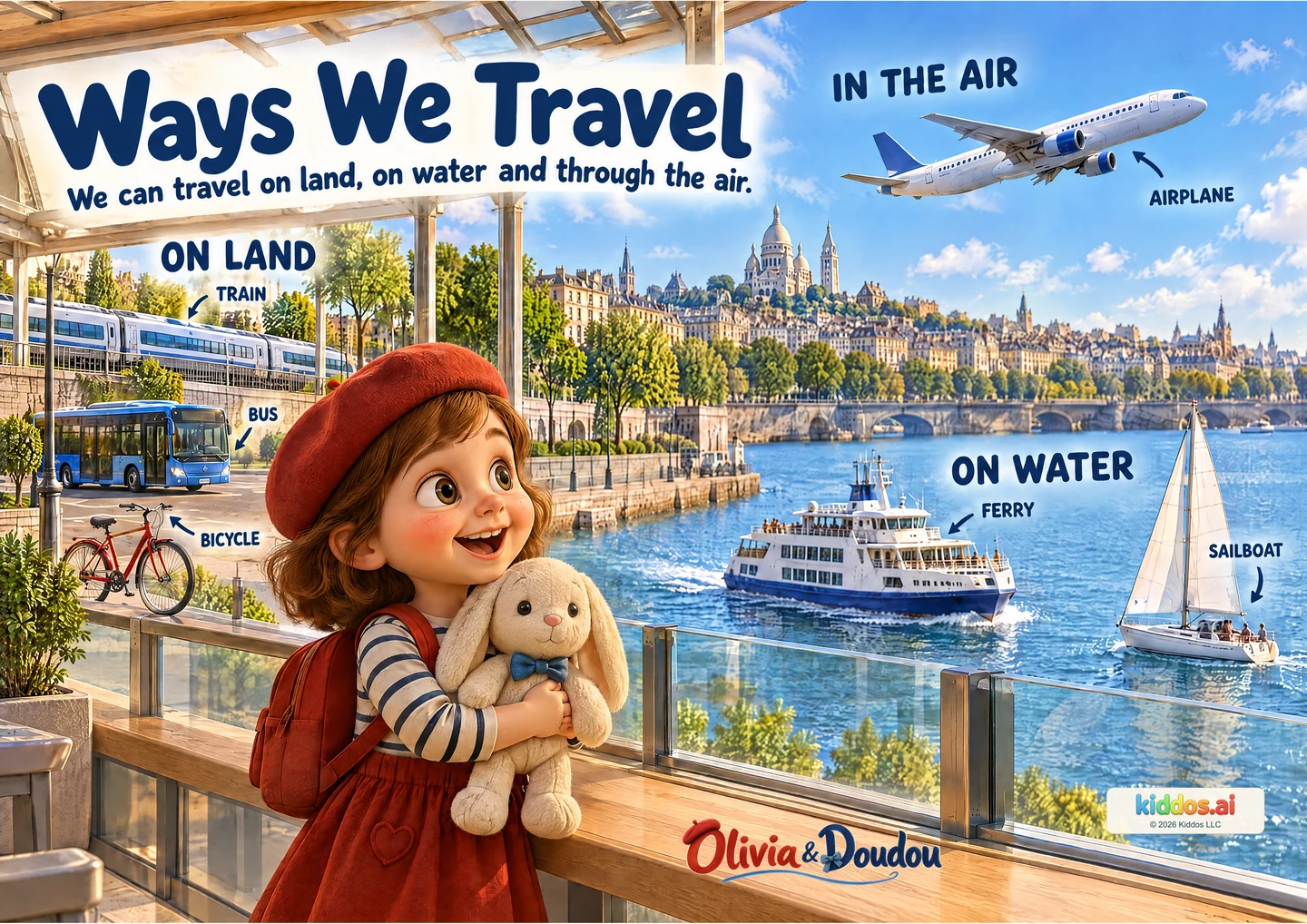
Ways We Travel
Which vehicles travel on water?
Sort six familiar vehicles by the environment in which they travel and explain a choice.
Explore this lesson - 8
Build on your last discovery
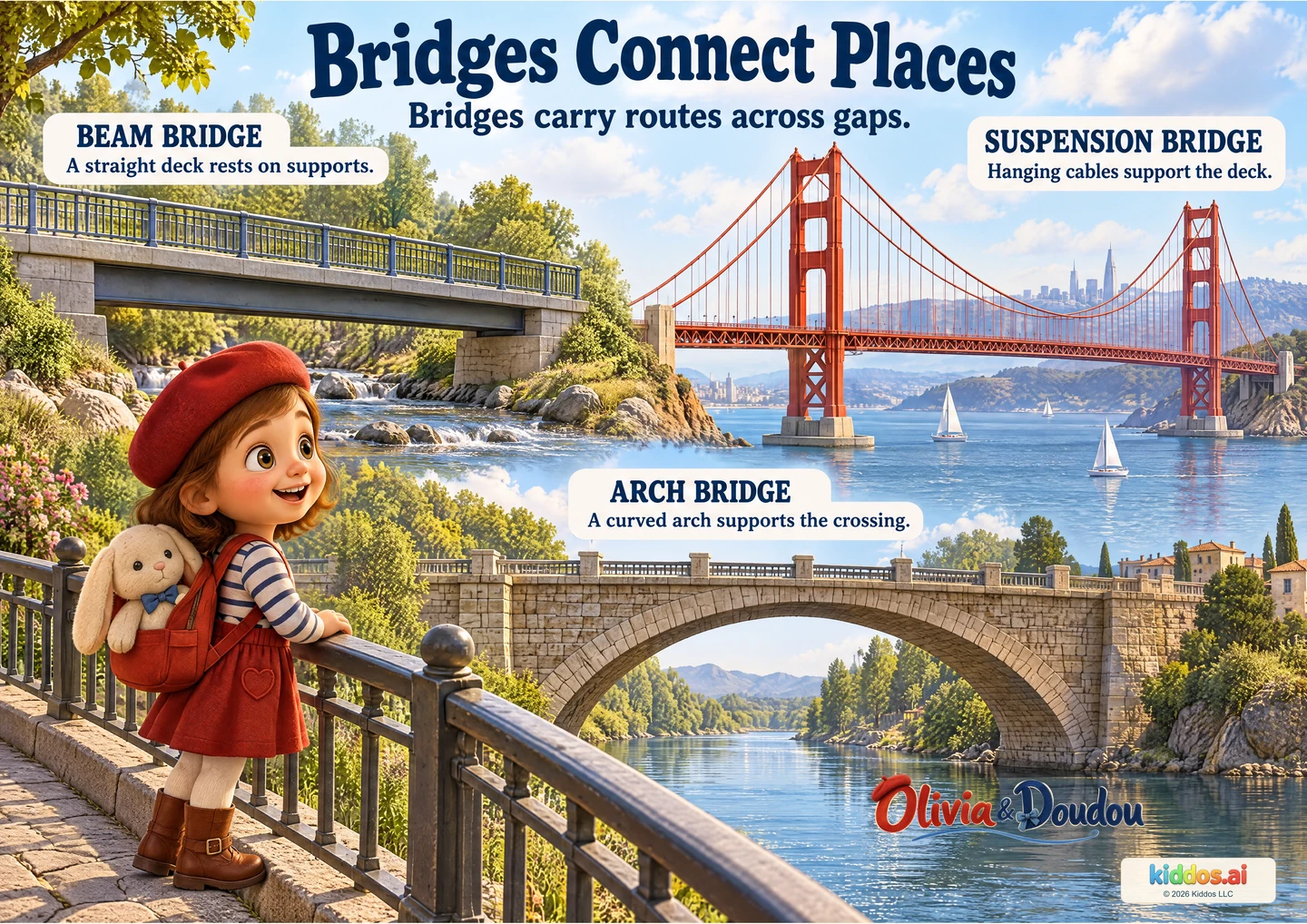
Bridges Connect Places
What is the deck of a bridge?
Recognize three bridge forms and identify a visible part that supports each crossing.
Explore this lesson
For teachers
A sequence you can adapt.
Turn a place into a map, add directions, notice natural and built features, then connect settlements with routes and crossings.
Paper and a pencil or crayon; the pictures can be viewed on a screen. No purchase or travel is needed. Read the answer cues and offer a described or pointed response.
- One Place, Three Views
Match the same features across side, overhead and symbol views.
Return prompt: The simple map uses shapes for features. Next, use a map key to match symbols with meanings.
- How to Read a Map
Match symbols with the key and follow a connected route.
Return prompt: The key tells us what a symbol means. Next, use directions to describe where it is.
- North, South, East & West
Describe positions from one compass reference point.
Return prompt: Directions help us describe a place. Next, notice which features are natural and which people built.
- Nature & People Shape Places
Explain how a built feature relates to natural surroundings.
Return prompt: Natural features and buildings share a landscape. Next, compare places where people live together.
- Cities, Towns, Villages & Countryside
Compare visible settlements and a connection between them.
Return prompt: Look within one settlement. Next, notice useful features of homes and their surroundings.
- Homes and Their Surroundings
Explain the useful feature shown on one home model.
Return prompt: Homes are connected with other places. Next, choose ways people might travel between them.
- Ways We Travel
Choose a way of traveling that fits a route.
Return prompt: A route may meet a gap. Next, compare three ways bridges support a crossing.
- Bridges Connect Places
Identify a bridge support and explain its crossing.
Return prompt: A crossing can also be a landmark. Next, recognize the Golden Gate Bridge among three book destinations.
Closing check: Tell a pretend journey and explain a connection, a useful destination and one way to care for the place.
Take this journey onto paper.
The poster pack includes every lesson in this journey. The companion includes parent conversations, classroom plans and a discovery record.