

A Gina & Ollie learning journey
Light and sky
What can light help us discover?
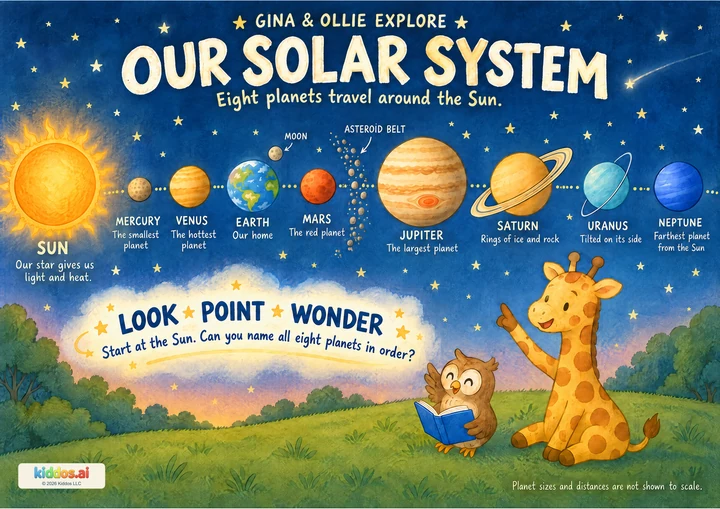
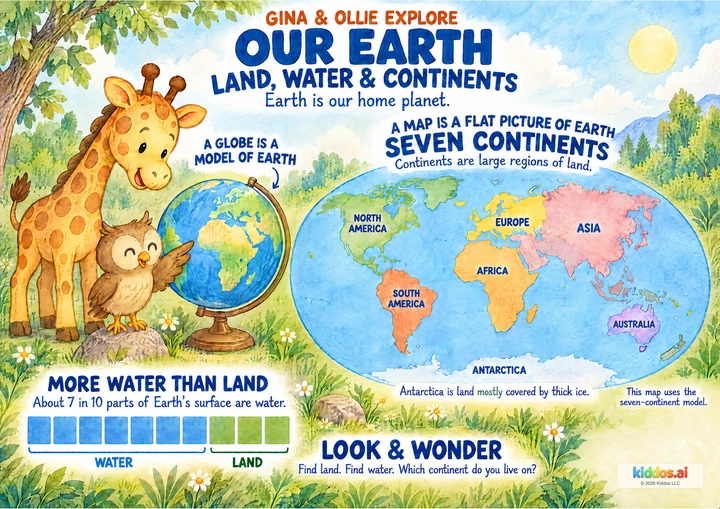
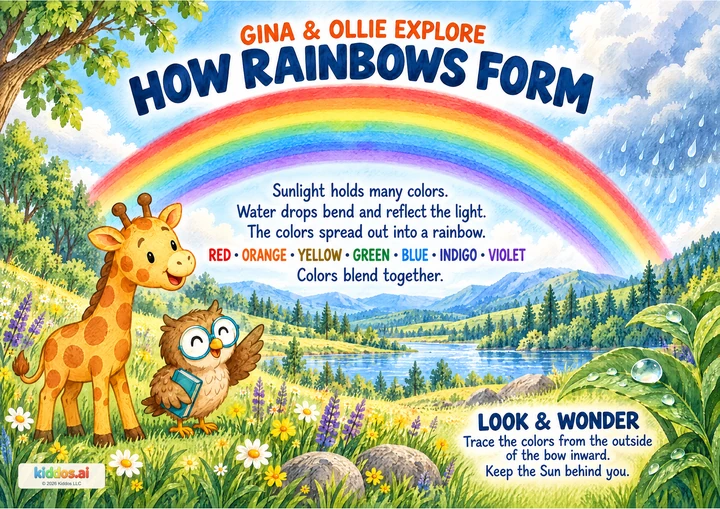
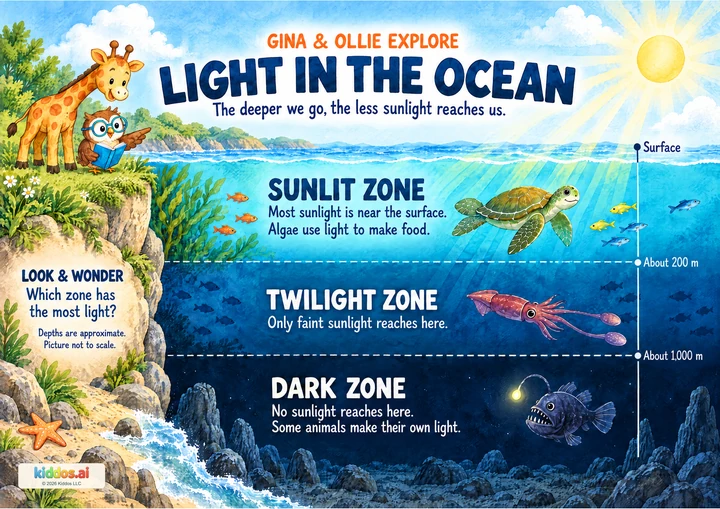
Start with a nearby shadow, then use models to consider daylight and the Moon. As an optional branch, find Earth in the Solar System, then zoom in on its land, water and continents. Choose rainbows or ocean light as other explorations.
Begin the journeyAt your own pace.
Spend separate sessions on shadows, Earth turning and Moon phases. They involve light but have different explanations. For the planet-to-home branch, explore Solar System then Our Earth; continue to water or habitats if curiosity leads there. These are choices, not prerequisites.
A discovery to listen for.
Ask learners to explain one light situation and name what the diagram represents rather than treating every mark as something visible in nature.
- 1
Start here
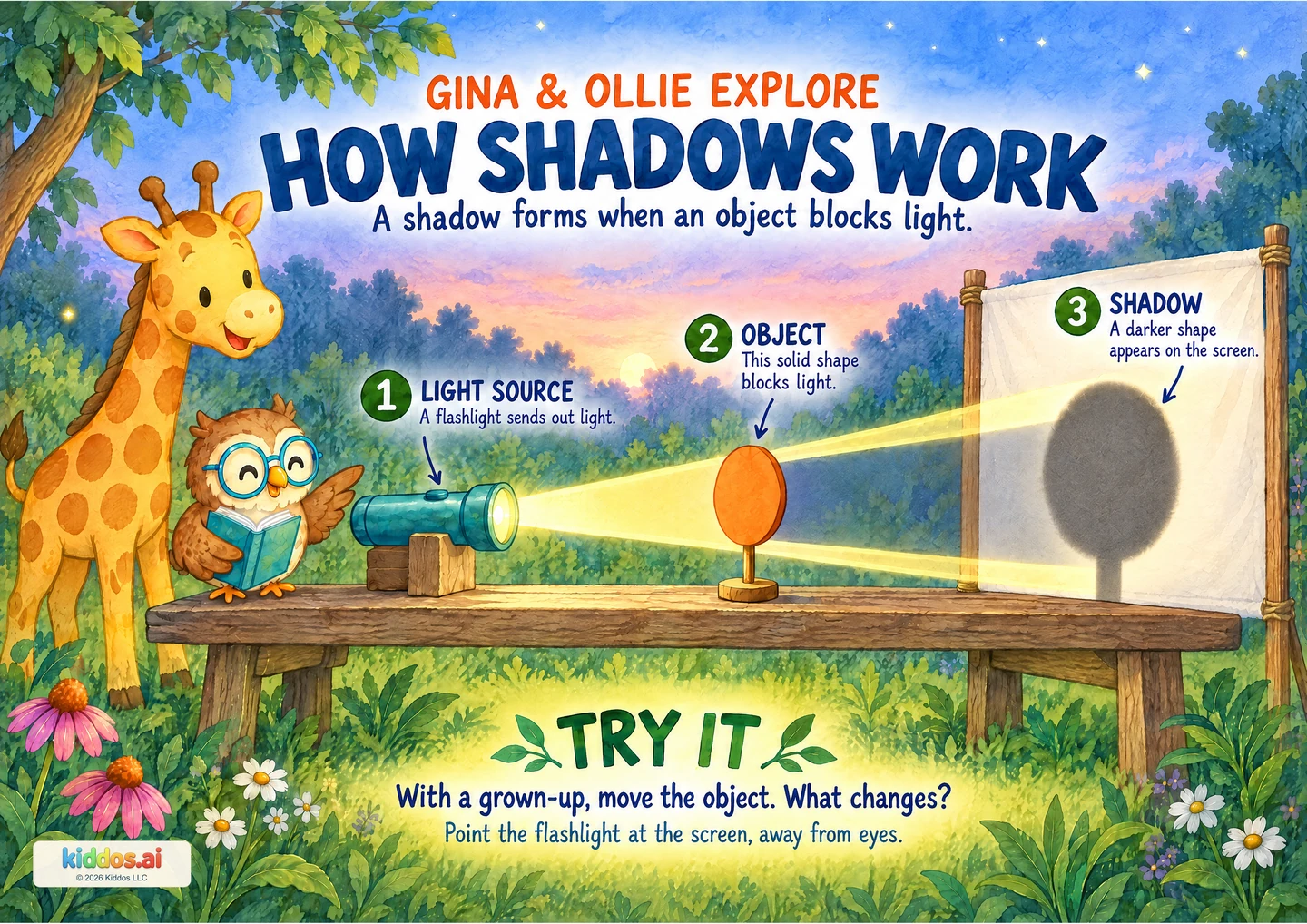
How Shadows Work
What needs to be between a light and a screen to make this shadow?
Identify light source, blocking object and shadow in their correct relationship.
Explore this lesson - 2
Build on your last discovery
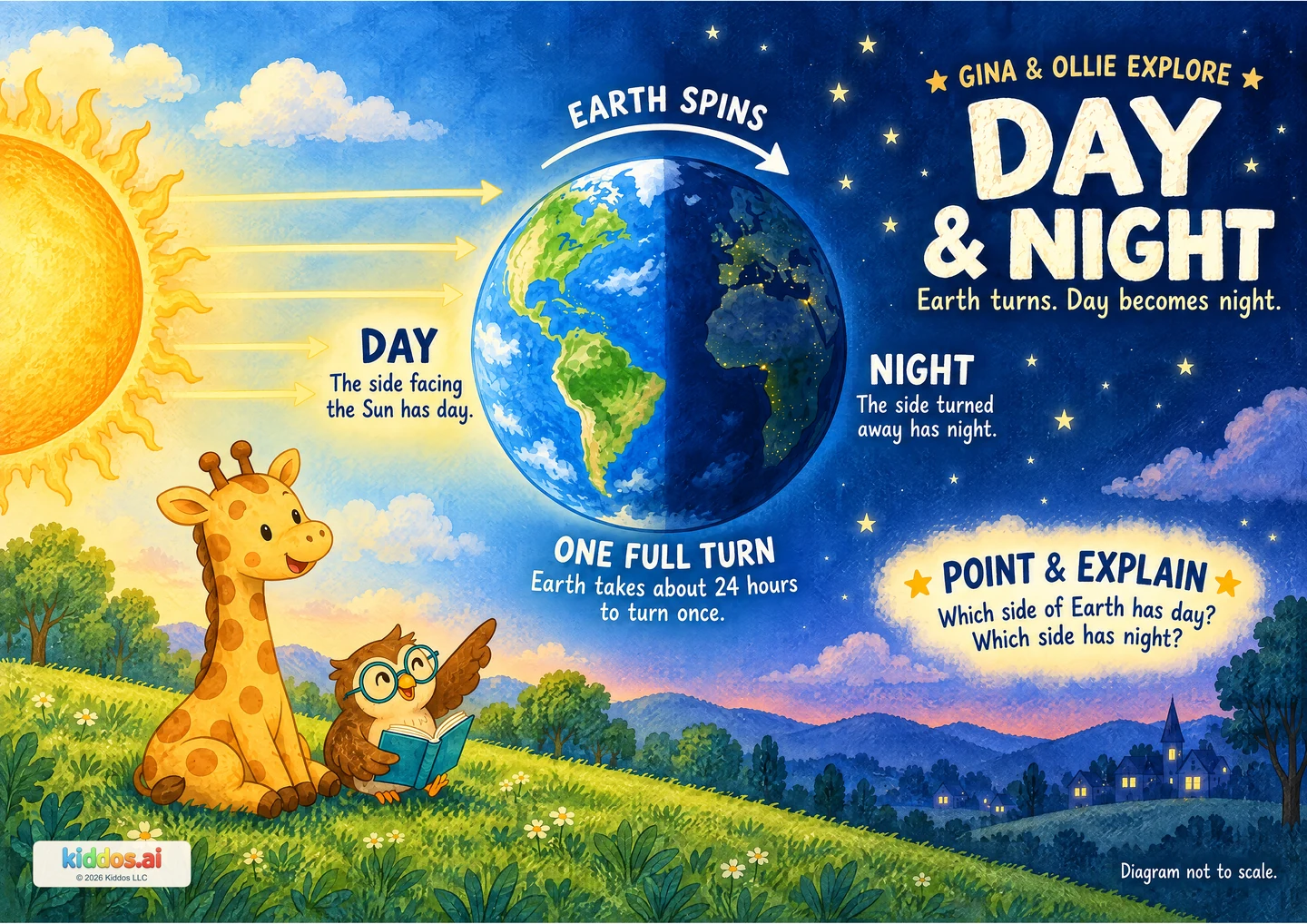
Day and Night
Why can a place have daylight and later have night?
Explain the pictured change using Earth’s turning and the Sun-facing side.
Explore this lesson - 3
Build on your last discovery
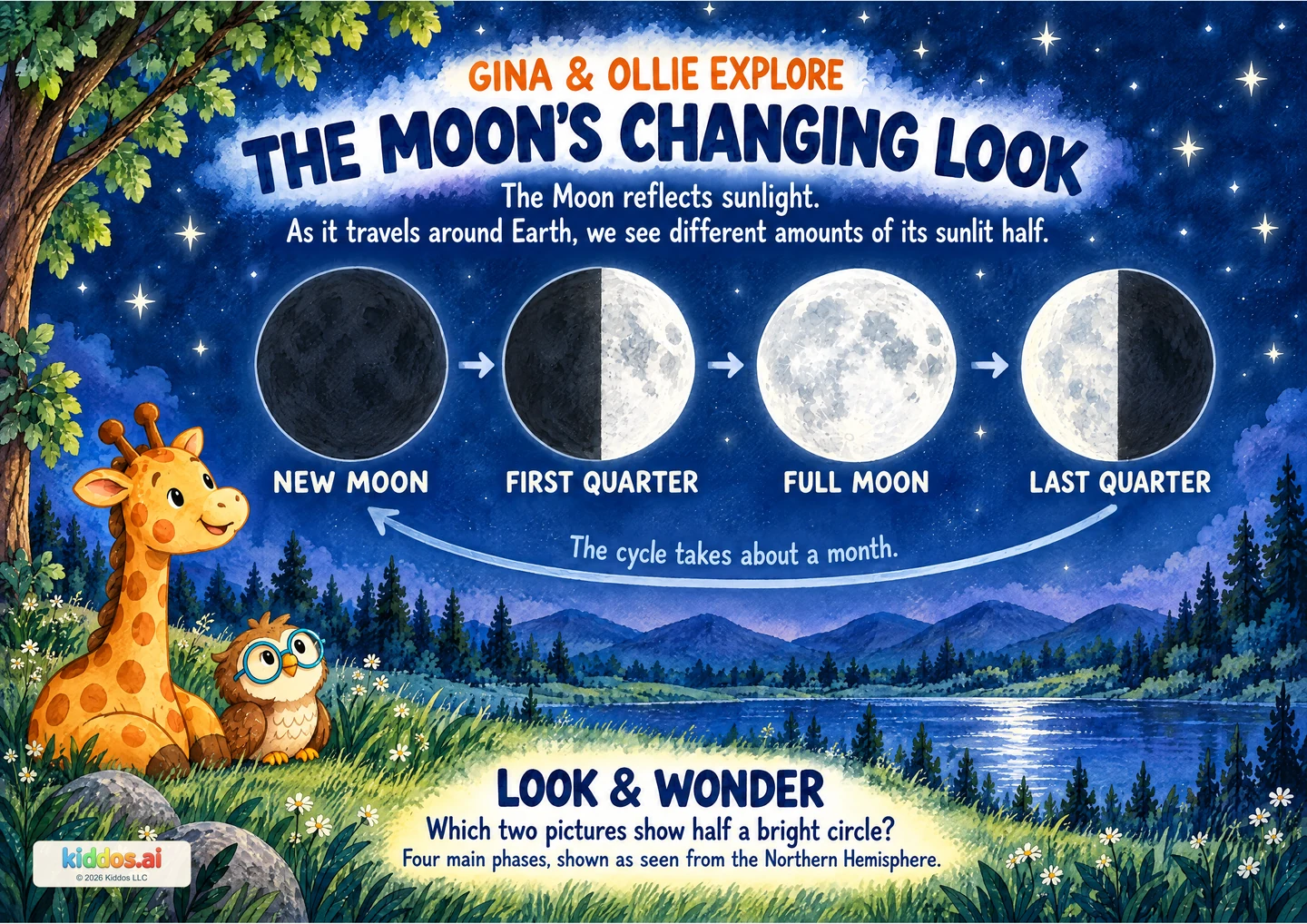
Moon Phases
Why does the Moon seem to have different shapes?
Describe the changing view of the Moon’s sunlit half without saying pieces disappear.
Explore this lesson
Where will curiosity take you?
These related explorations are optional choices. Each has its own explanation and activity.
For teachers
A sequence you can adapt.
Use one core poster per short session. Begin the next session by revisiting one previous idea; offer branches as choices.
Print or display the selected poster and prepare its listed materials. Read the misconception note and answer cues. Use the companion journal for optional records.
- How Shadows Work
Identify light source, blocking object and shadow in their correct relationship.
Return prompt: When you notice another shadow, identify what supplies light and what blocks it.
- Day and Night
Explain the pictured change using Earth’s turning and the Sun-facing side.
Return prompt: How would you explain night to someone who thinks the Sun goes around Earth each day?
- Moon Phases
Describe the changing view of the Moon’s sunlit half without saying pieces disappear.
Return prompt: Compare two dated drawings. What changed in the bright part, and what remains uncertain?
Closing check: Ask learners to explain one light situation and name what the diagram represents rather than treating every mark as something visible in nature.
Take this journey onto paper.
The poster pack includes every lesson in this journey. The companion includes parent conversations, classroom plans and a discovery record.