Five minutes together
Look. Wonder. Talk.
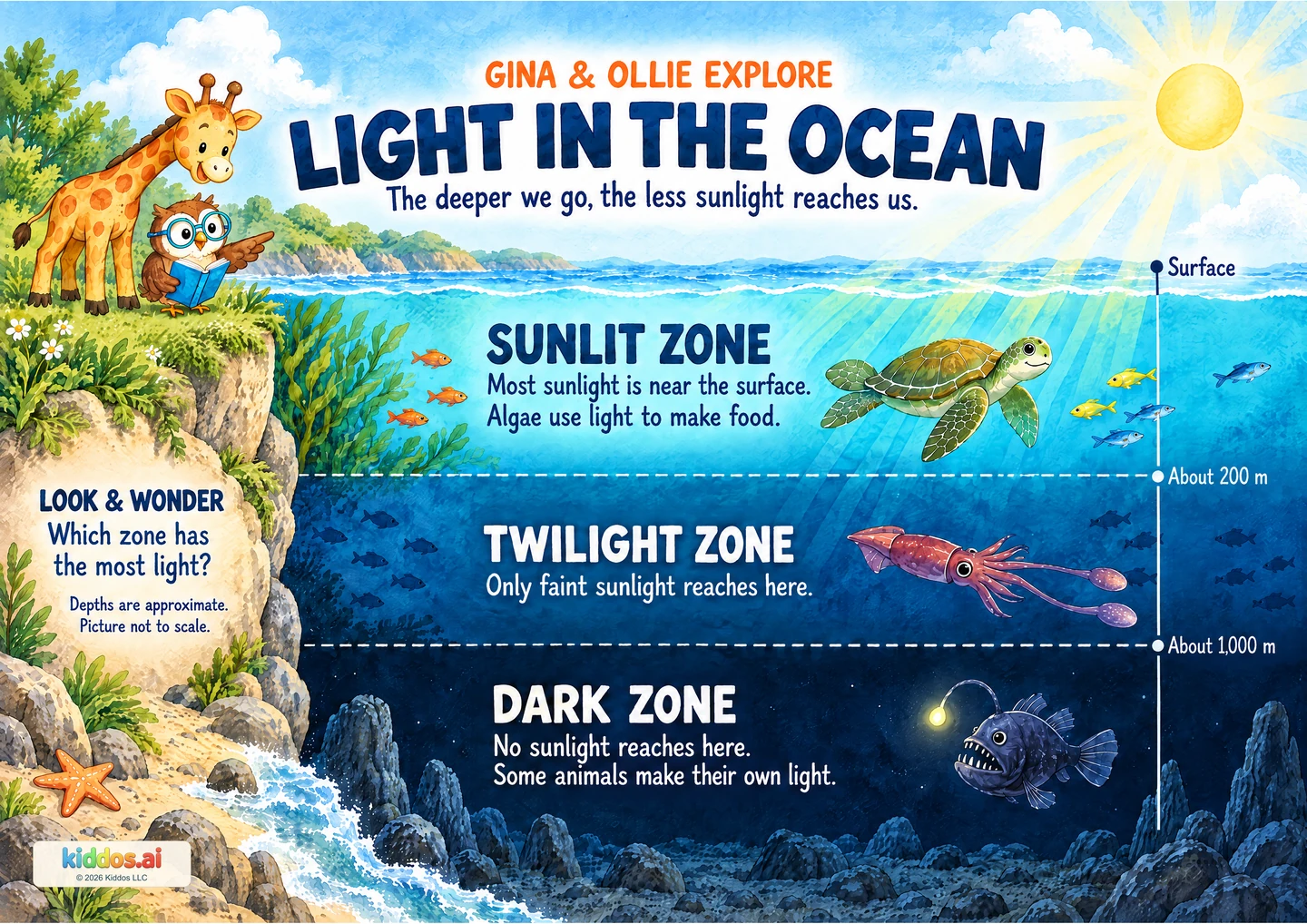
Our discovery: Compare the three simplified light zones and distinguish sunlight from animal-made light.
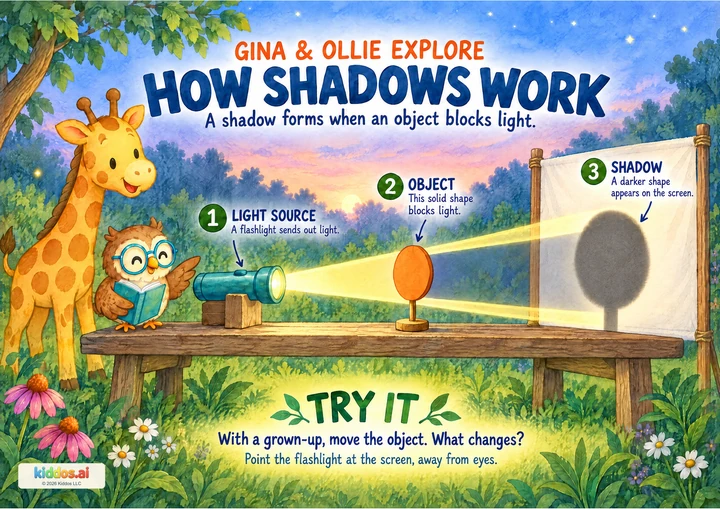
Remember: We asked where light reaches in a shadow model. Now explore a different situation: sunlight reaching into ocean water.
Revisit that discoveryBegin at the surface and move downward through the picture. Compare how much sunlight reaches each zone, using the names before the depth numbers. Explain that some animals in the dark ocean make their own light. The boundaries are approximate, and the drawing compresses a very deep ocean onto one page.
Imagine moving down this picture. What changes as you go deeper?
Start here
Find the brightest zone near the surface.
Explore further
Explain how a place without sunlight can still contain an animal that produces light.
Three questions to share
1Where does the ocean have the most sunlight?
Answer cue: Near the surface, in the sunlit zone.
2How is the twilight zone different?
Answer cue: Only faint sunlight reaches it.
3Can there be light in a zone without sunlight?
Answer cue: Yes. Some animals make their own light.
If your child is unsure: Let’s use one clue together. Find the brightest zone near the surface.
Something to try together
Build a light-zone model
You’ll need: The poster and an adult; optional paper and drawing materials. Describing or pointing is enough.
- Divide a sheet into three areas, or describe three levels aloud.
- Label them sunlit, twilight and dark; use words or different patterns as well as optional colors.
- Place the surface at the top and explain the change. Keep the poster’s approximate depths as labels, not measured scale.
What this can show
Less sunlight reaches deeper water. An animal’s own light is a different source; this paper model is not an experiment about exact ocean depth.
Return to it: Compare with the Shadow poster. What is similar about asking where light reaches, and what is different about the situation?
Get the guide and discovery recordFor teachers · About 20 minutes
A small lesson with room to explore.
Learning aim: Compare the three simplified light zones and distinguish sunlight from animal-made light.
Prepare: Read the poster, answer cues and misconception note. Prepare only the materials named in the activity; keep a picture-only or described option available.
- 3 min
Reconnect and wonder
How does sunlight change as we look deeper into the ocean? Invite an initial idea; record it without marking it right or wrong.
- 4 min
Look together
Find the brightest zone near the surface. Introduce surface using the poster.
- 8 min
Investigate or represent
Use “Build a light-zone model.” Let pairs take turns noticing and recording, with adult help and the activity’s stated boundaries.
- 5 min
Explain and return
Ask the core check: How does sunlight change as we look deeper into the ocean? Accept pointing, words, signing or a drawing. If the learner is ready, offer this optional extension: Explain how a place without sunlight can still contain an animal that produces light.
Check the idea together
How does sunlight change as we look deeper into the ocean?
What to listen for
Most sunlight is near the surface, faint sunlight reaches the twilight zone and no sunlight reaches the dark zone. Some animals can produce their own light. Less sunlight reaches deeper water. An animal’s own light is a different source; this paper model is not an experiment about exact ocean depth.
Accept pointing, speech, signing, a drawing or adult dictation. Describe the illustration and use labels/position as well as color. Offer one contrast first, and use the extension when the learner is ready.