Five minutes together
Look. Wonder. Talk.
Our discovery: Distinguish a day’s weather from weather patterns studied across many years.
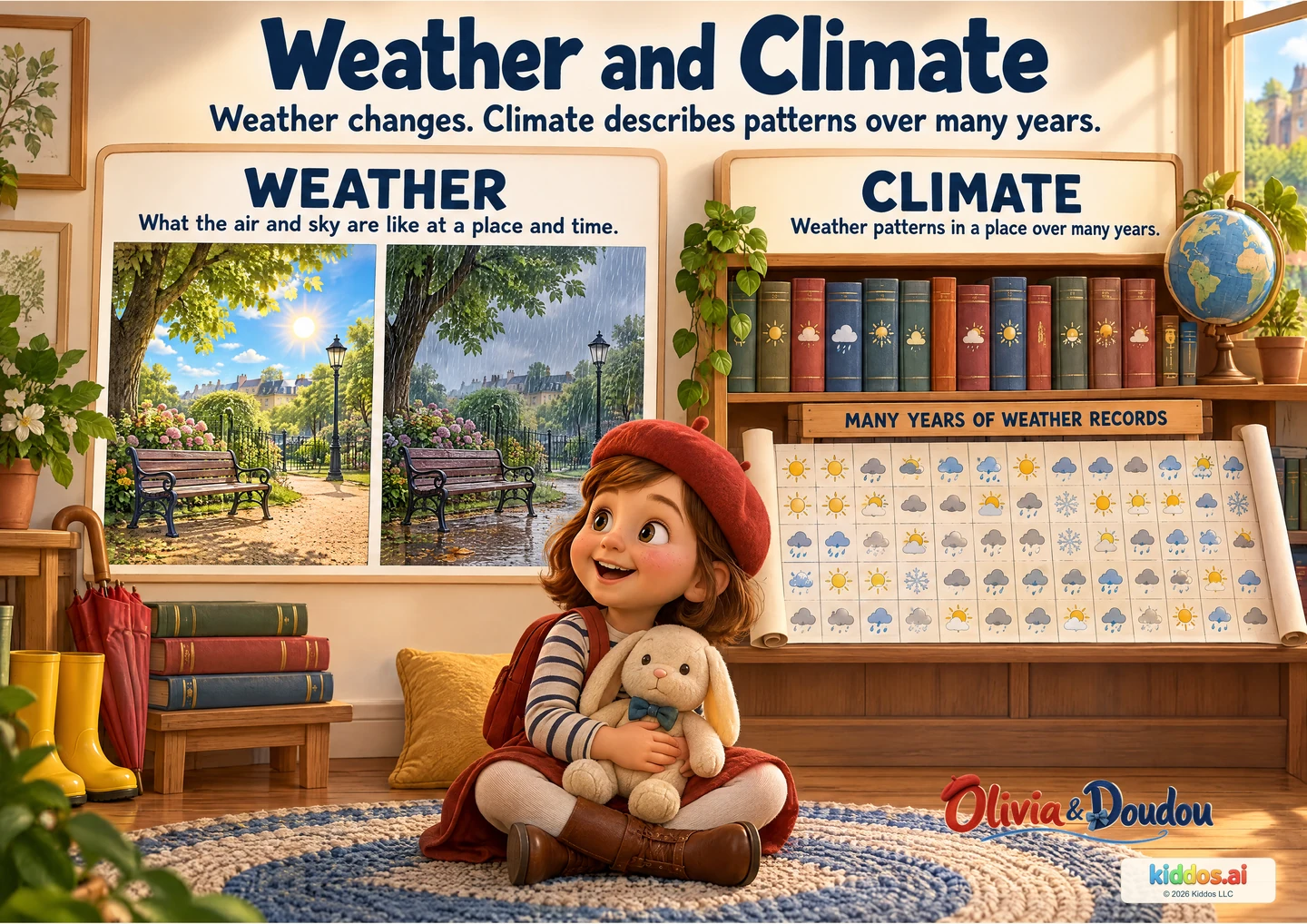
Compare the two pictures of the same park. Ask what changed, then look at the shelf of records. The pictures show separate weather observations; the books represent information gathered over many years.
What changed between the two park pictures?
Start here
Compare sunshine and rain in two pictures of the same place.
Explore further
Explain why a two-day record shows weather observations but cannot establish a climate pattern.
Three questions to share
1What changed between the two park pictures?
Answer cue: One shows sunshine and the other rain. The bench, tree and path help us recognize the same place.
2Would one rainy day tell us a place’s climate?
Answer cue: No. Climate describes weather patterns over many years. One day is a weather observation, not enough to describe the long-term pattern.
3Why might someone keep weather records?
Answer cue: Many observations help people compare patterns across time. Climate summaries commonly use periods of 30 years or more; a child does not need to memorize that number.
If your child is unsure: Compare sunshine and rain in two pictures of the same place.
Something to try together
Start a tiny weather record
You’ll need: Paper and crayons; a safe indoor view or an adult’s description.
- Notice today’s weather from indoors or an adult’s description. Draw a symbol and add today’s date.
- Compare the sunny and rainy park pictures now. Name one change and one thing that stayed the same.
- These are weather observations. Climate needs many years of records.
What this can show
The child distinguishes a current observation from a pattern studied over many years. Observe from indoors without opening or leaning from a window. Do not go outside to test rain, storms, heat or cold. An adult can supply observations if the view is inaccessible.
Return to it: Optional another-day follow-up: add a weather observation. Look at Homes and Their Surroundings for shade and sloping roofs.
Get the guide and discovery recordFor teachers · About 15 minutes
A small lesson with room to explore.
Learning aim: Distinguish a day’s weather from weather patterns studied across many years.
Prepare: Paper and crayons; a safe indoor view or an adult’s description. Read the answer cues before sharing.
- 3 min
Notice
Look together and name one visible detail before introducing new words.
- 4 min
Compare
Use the three prompts to connect the pictured evidence with the lesson.
- 5 min
Try together
Notice today’s weather from indoors or an adult’s description. Draw a symbol and add today’s date. Compare the sunny and rainy park pictures now. Name one change and one thing that stayed the same. These are weather observations. Climate needs many years of records.
- 3 min
Explain
The child distinguishes a current observation from a pattern studied over many years.
Check the idea together
The child distinguishes a current observation from a pattern studied over many years.
What to listen for
One shows sunshine and the other rain. The bench, tree and path help us recognize the same place. No. Climate describes weather patterns over many years. One day is a weather observation, not enough to describe the long-term pattern. Many observations help people compare patterns across time. Climate summaries commonly use periods of 30 years or more; a child does not need to memorize that number.
Describe each picture aloud and accept spoken or tactile symbols. Use the displayed pictures if observing outdoors is not possible.