

A Gina & Ollie learning journey
Everyday investigations
What happens when we try something and look closely?
Connect a push or pull to moving a load on a ramp. Then choose an independent floating investigation or a vibration model.
Begin the journeyAt your own pace.
Keep predictions distinct from revealed results. In a test, change one chosen feature while keeping the relevant setup the same. Floating, ramps and sound do not share one explanation.
A discovery to listen for.
Listen for a child comparing an idea with an observation, or explaining the limit of a picture-based model.
- 1
Start here
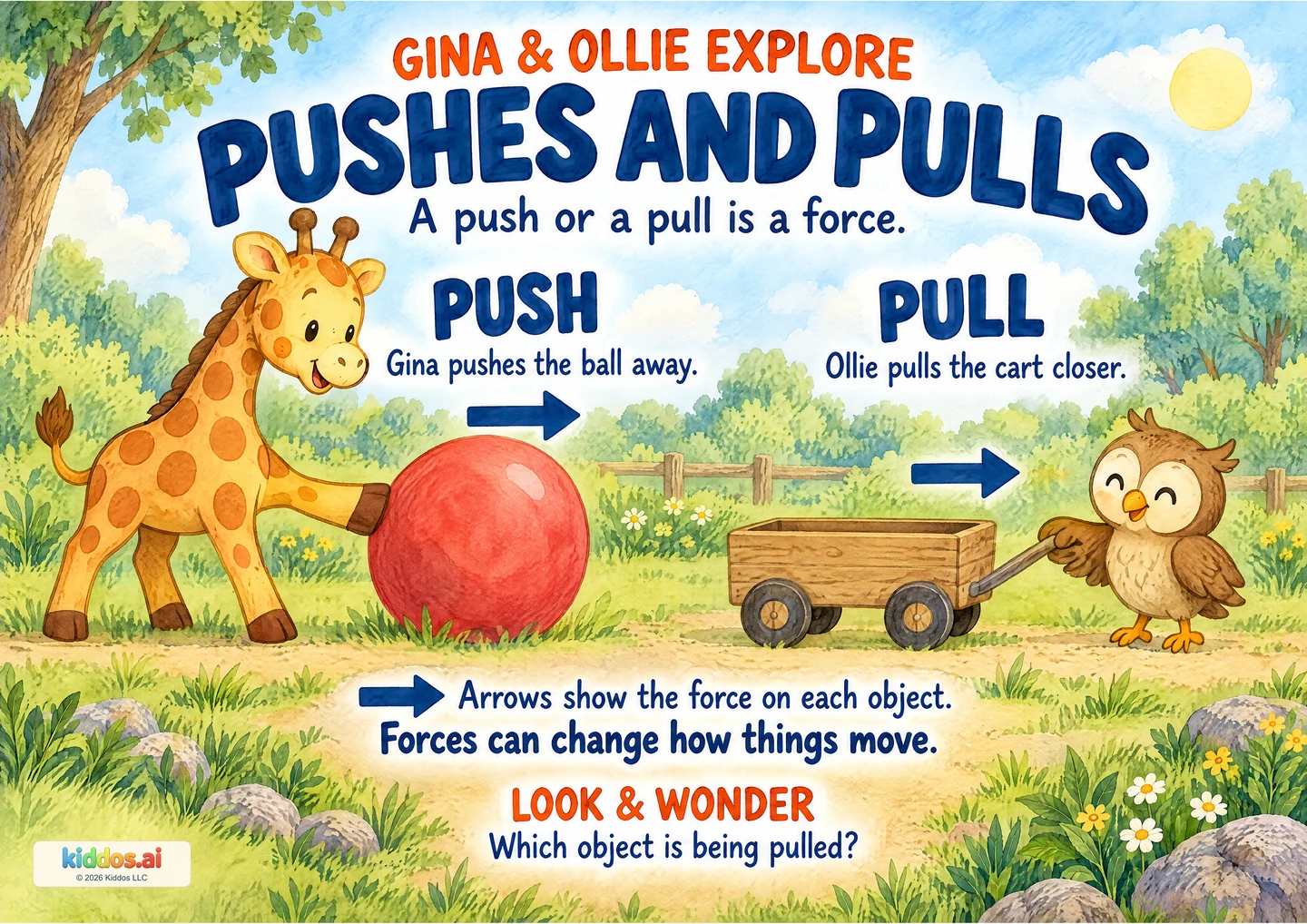
Pushes and Pulls
How can we tell a push from a pull?
Explain a pictured force in relation to the helper and object, not just left or right.
Explore this lesson - 2
Build on your last discovery
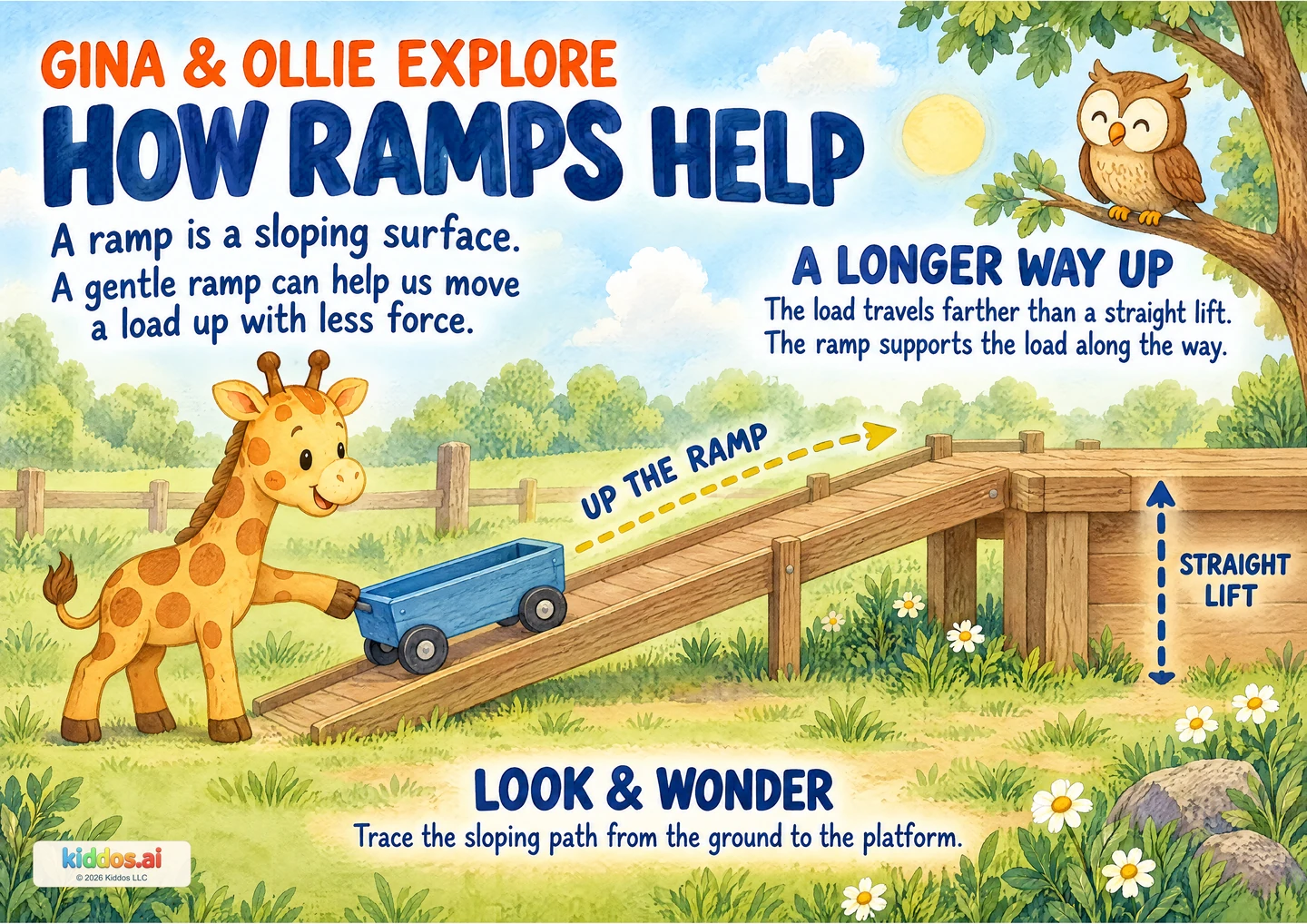
How Ramps Help
Why might a longer route upward be useful?
Compare route lengths to the same height and describe the ramp’s force-distance trade.
Explore this lesson
Where will curiosity take you?
These related explorations are optional choices. Each has its own explanation and activity.
For teachers
A sequence you can adapt.
Use one core poster per short session. Begin the next session by revisiting one previous idea; offer branches as choices.
Print or display the selected poster and prepare its listed materials. Read the misconception note and answer cues. Use the companion journal for optional records.
- Pushes and Pulls
Explain a pictured force in relation to the helper and object, not just left or right.
Return prompt: At the Ramps poster, point to the cart and describe what is pushing it.
- How Ramps Help
Compare route lengths to the same height and describe the ramp’s force-distance trade.
Return prompt: Find a ramp in a familiar picture or recall one you have seen. What two levels does it connect?
Closing check: Listen for a child comparing an idea with an observation, or explaining the limit of a picture-based model.
Take this journey onto paper.
The poster pack includes every lesson in this journey. The companion includes parent conversations, classroom plans and a discovery record.