

A Gina & Ollie learning journey
Animals around us
How do animals grow and live in their surroundings?
Start with visible features, compare two life cycles, then connect animals to needs, surroundings and food.
Begin the journeyAt your own pace.
Use the butterfly and frog posters side by side for one comparison session. Continue into habitats and camouflage as later core discoveries, then return to animal needs before exploring the food chain.
A discovery to listen for.
Ask learners to choose one animal and explain a feature, a change during growth or a habitat need using a pictured clue.
- 1
Start here
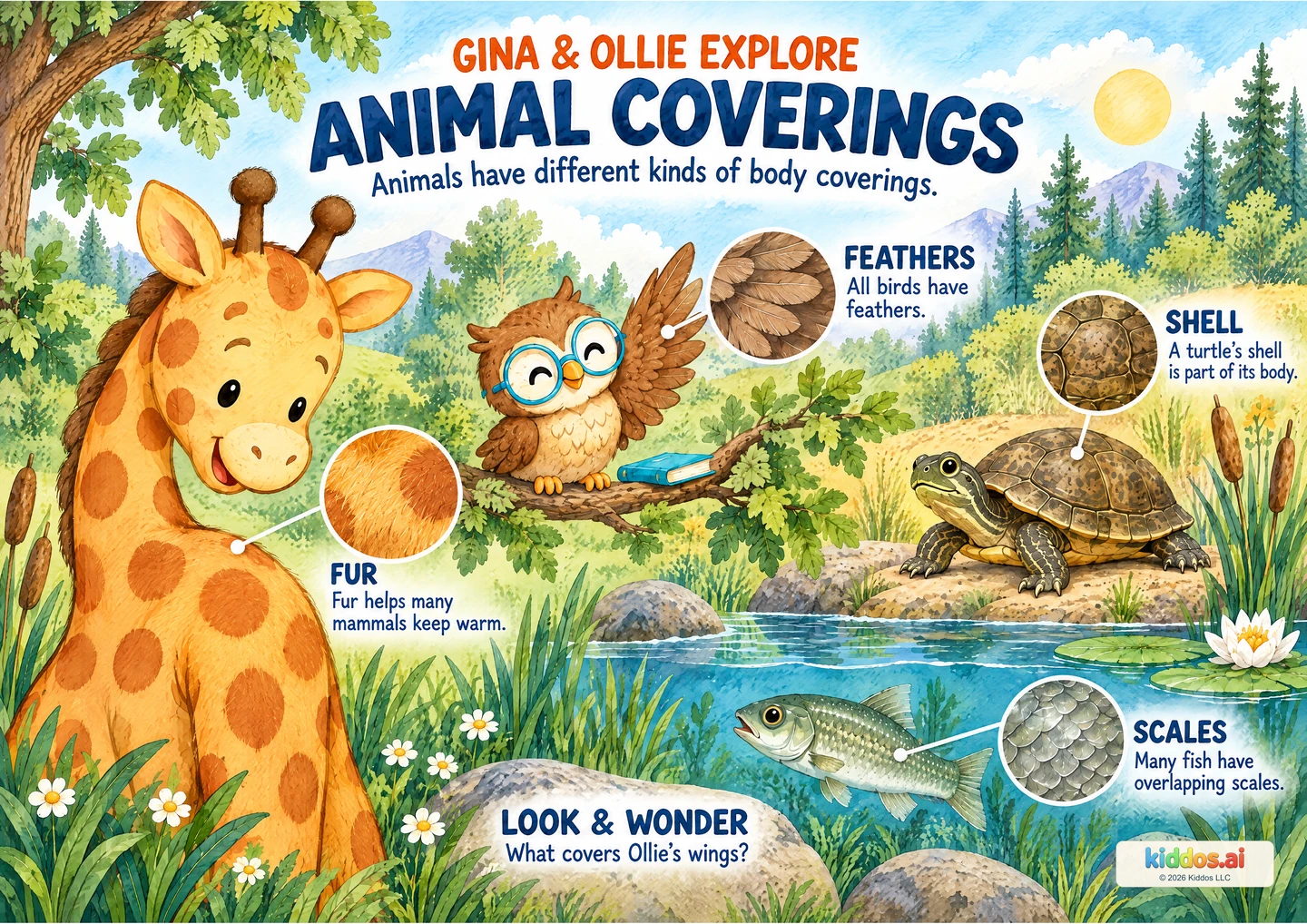
Animal Coverings
What can an animal’s covering help us notice?
Compare two pictured coverings without treating them as removable clothing.
Explore this lesson - 2
Build on your last discovery
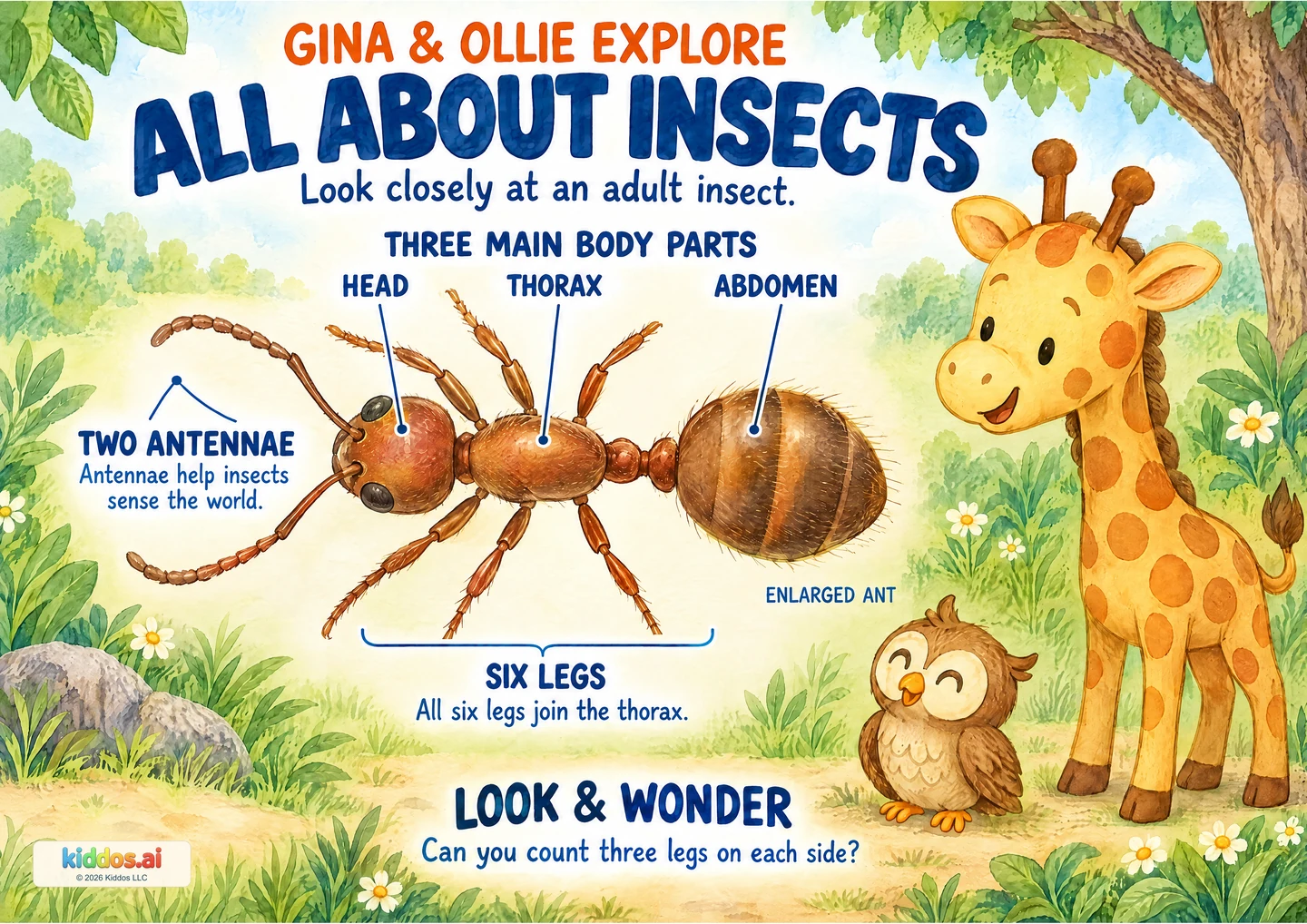
All About Insects
How can we recognize the main parts of an adult insect?
Count six legs attached to the middle body region and distinguish antennae from legs.
Explore this lesson - 3
Build on your last discovery
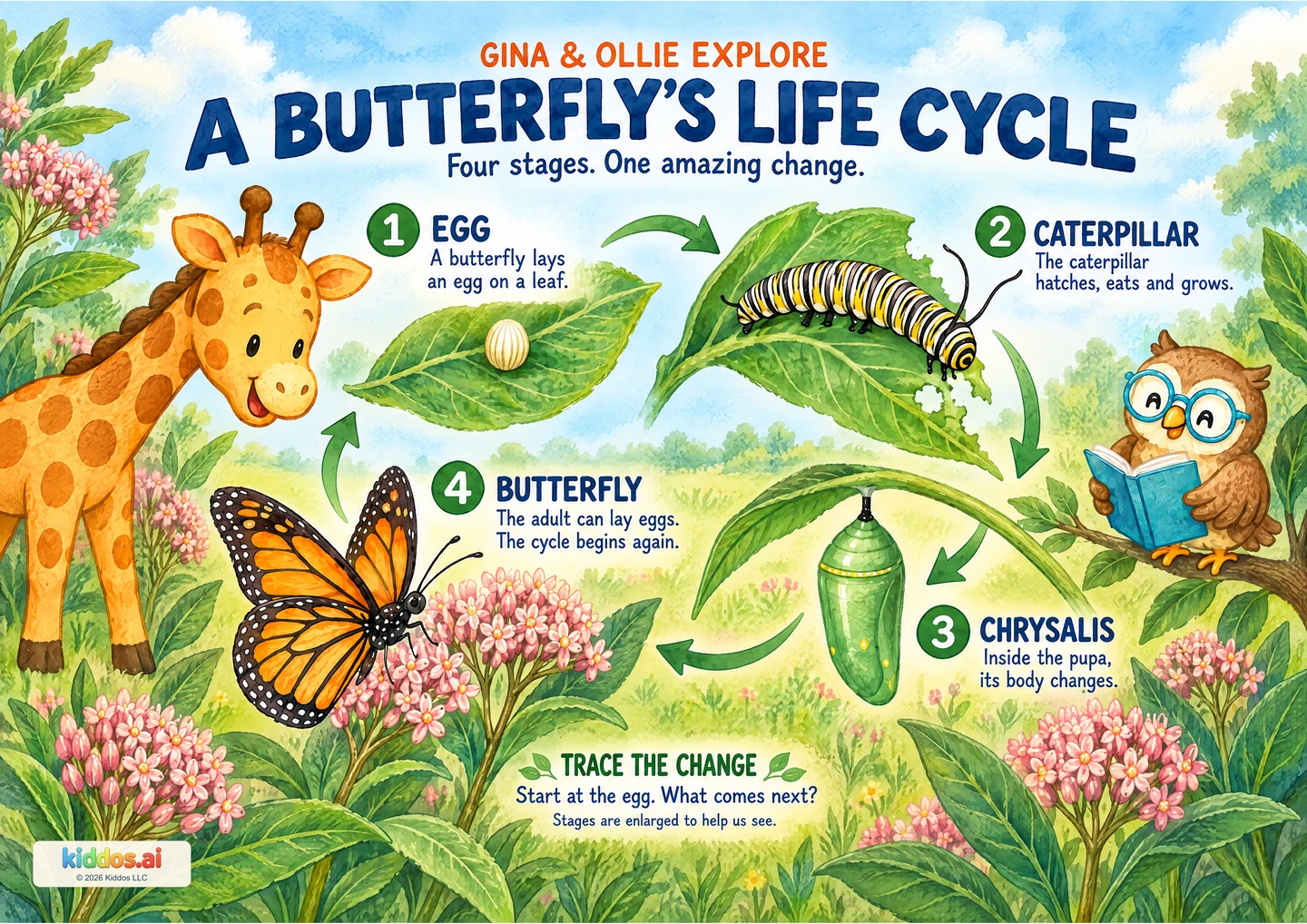
A Butterfly’s Life Cycle
How does a caterpillar become an adult butterfly?
Put the four pictured stages in order and identify one body change.
Explore this lesson - 4
Build on your last discovery
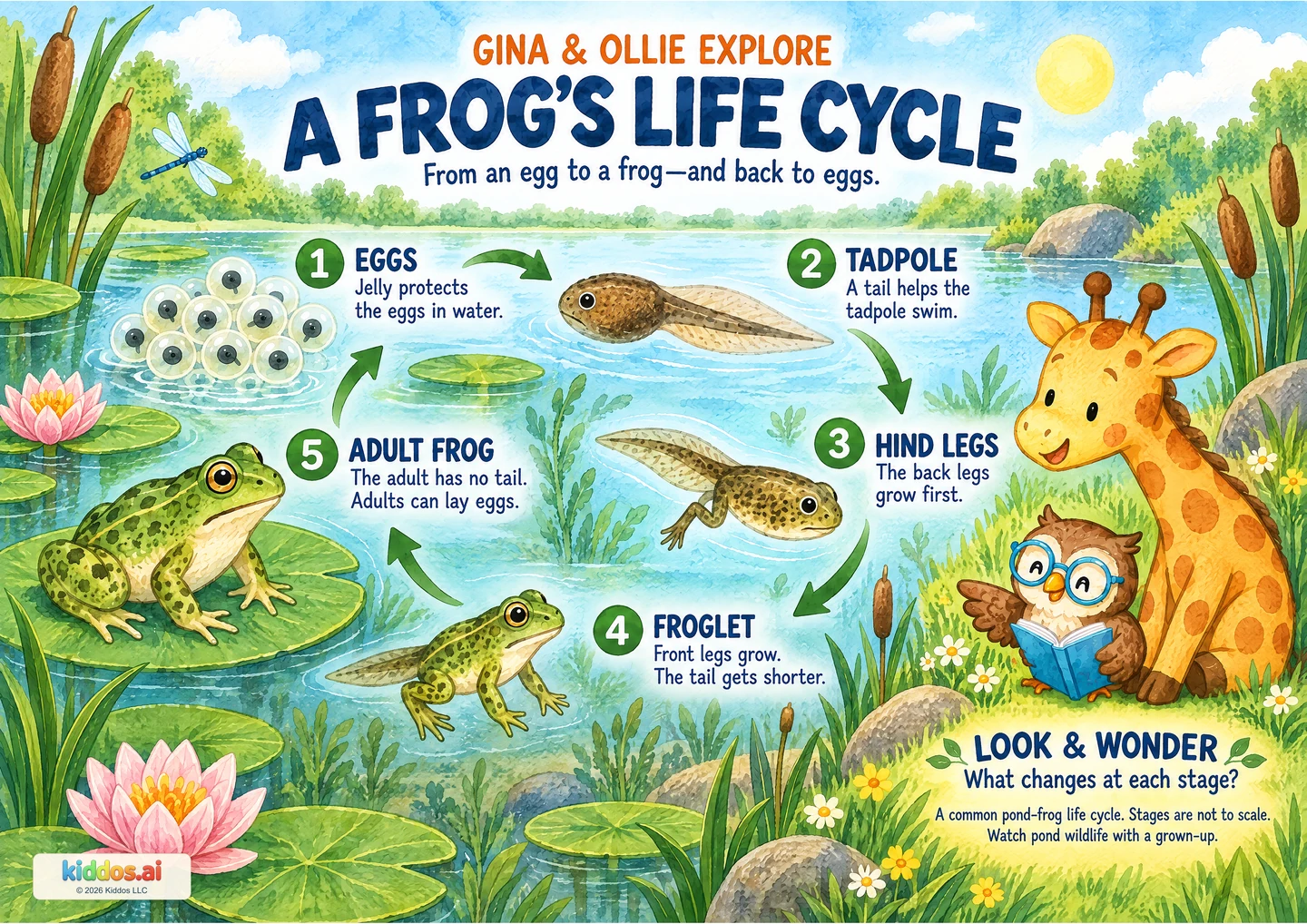
A Frog’s Life Cycle
What changes as a tadpole grows into a frog?
Describe the pictured changes in legs and tail across a common pond-frog cycle.
Explore this lesson - 5
Build on your last discovery
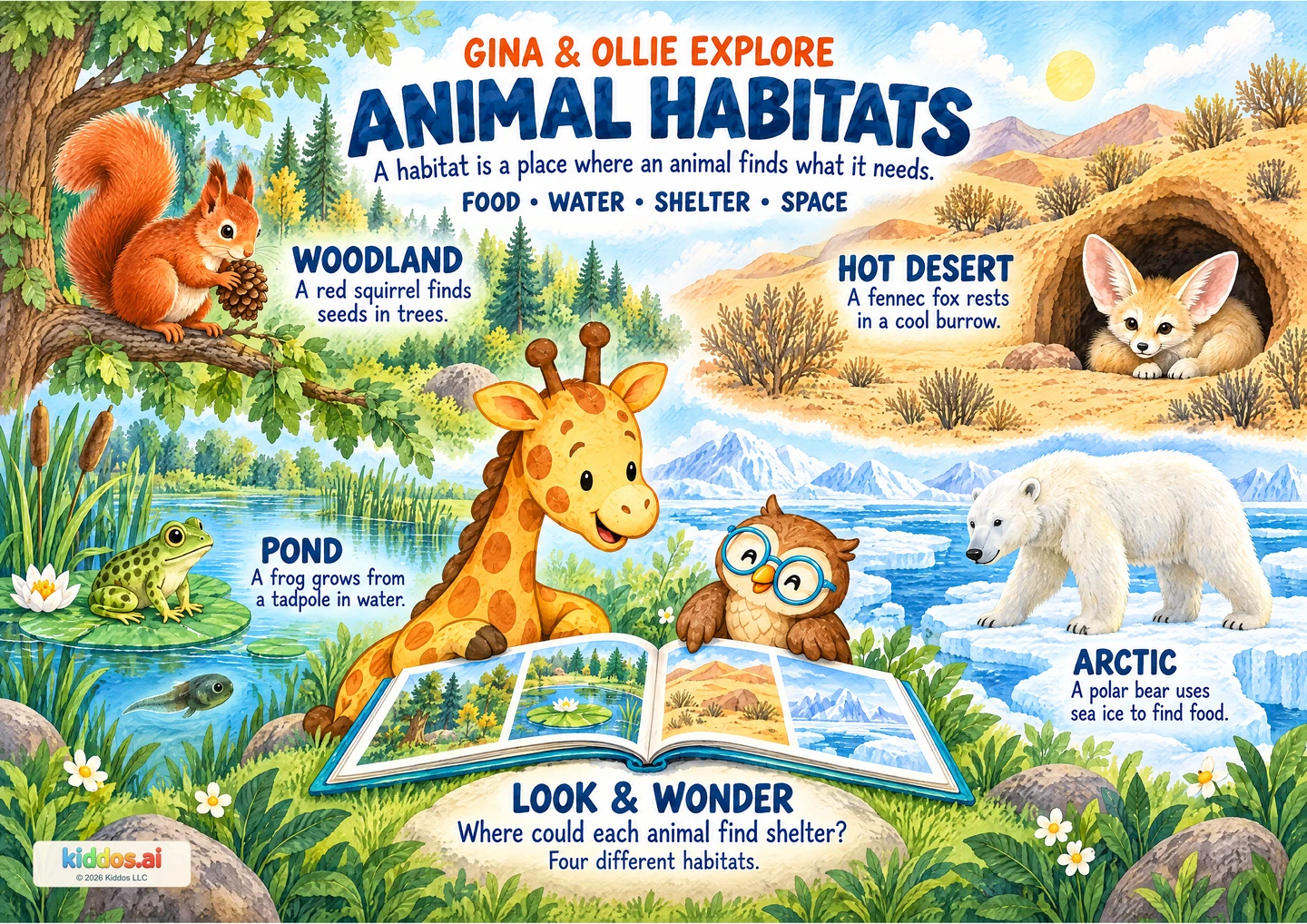
Animal Habitats
What makes a place a habitat for an animal?
Identify a pictured animal need and a feature that helps meet it.
Explore this lesson - 6
Build on your last discovery
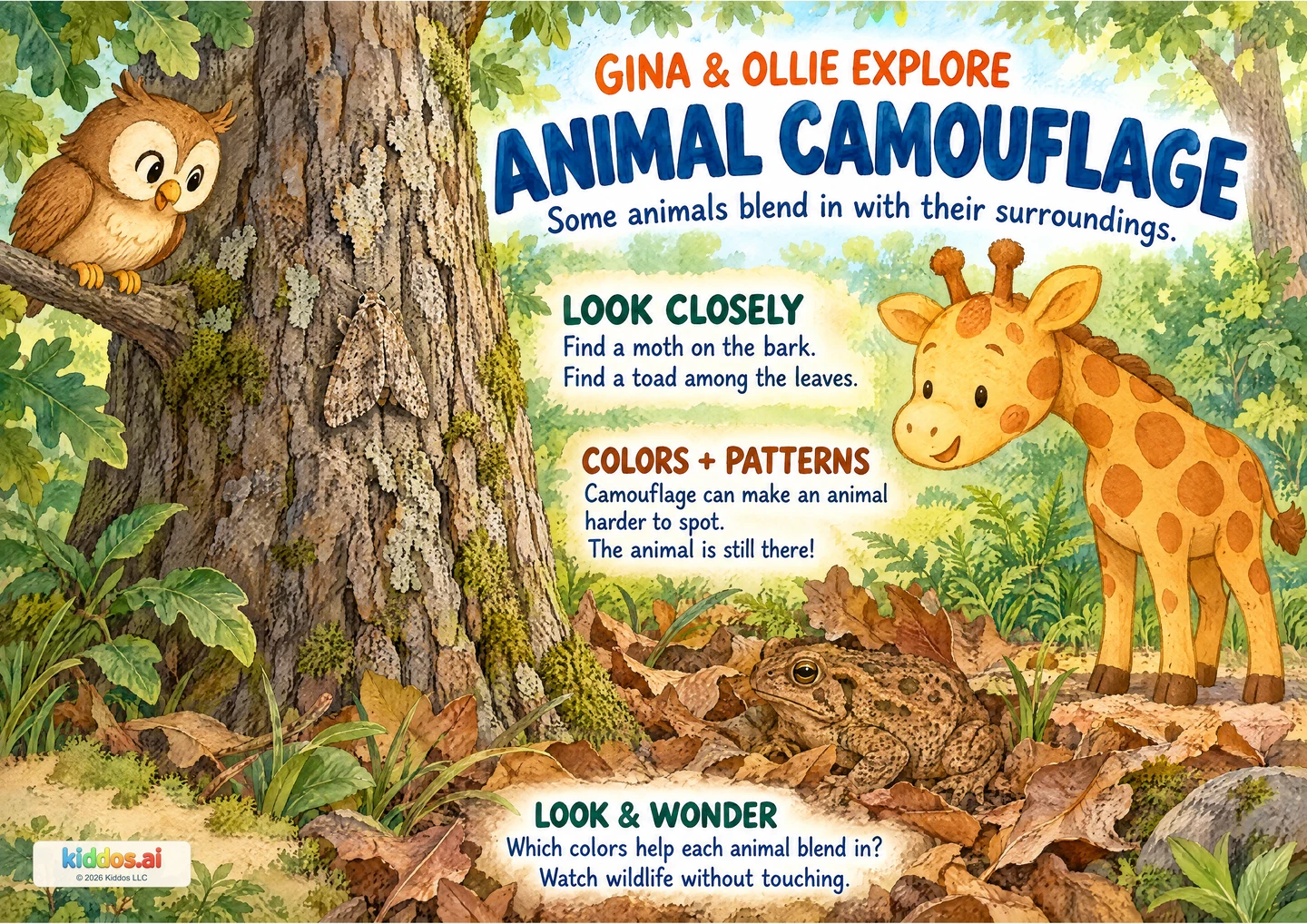
Animal Camouflage
What makes an animal harder to notice against a background?
Point to a color, pattern or outline that helps explain blending in.
Explore this lesson - 7
Build on your last discovery
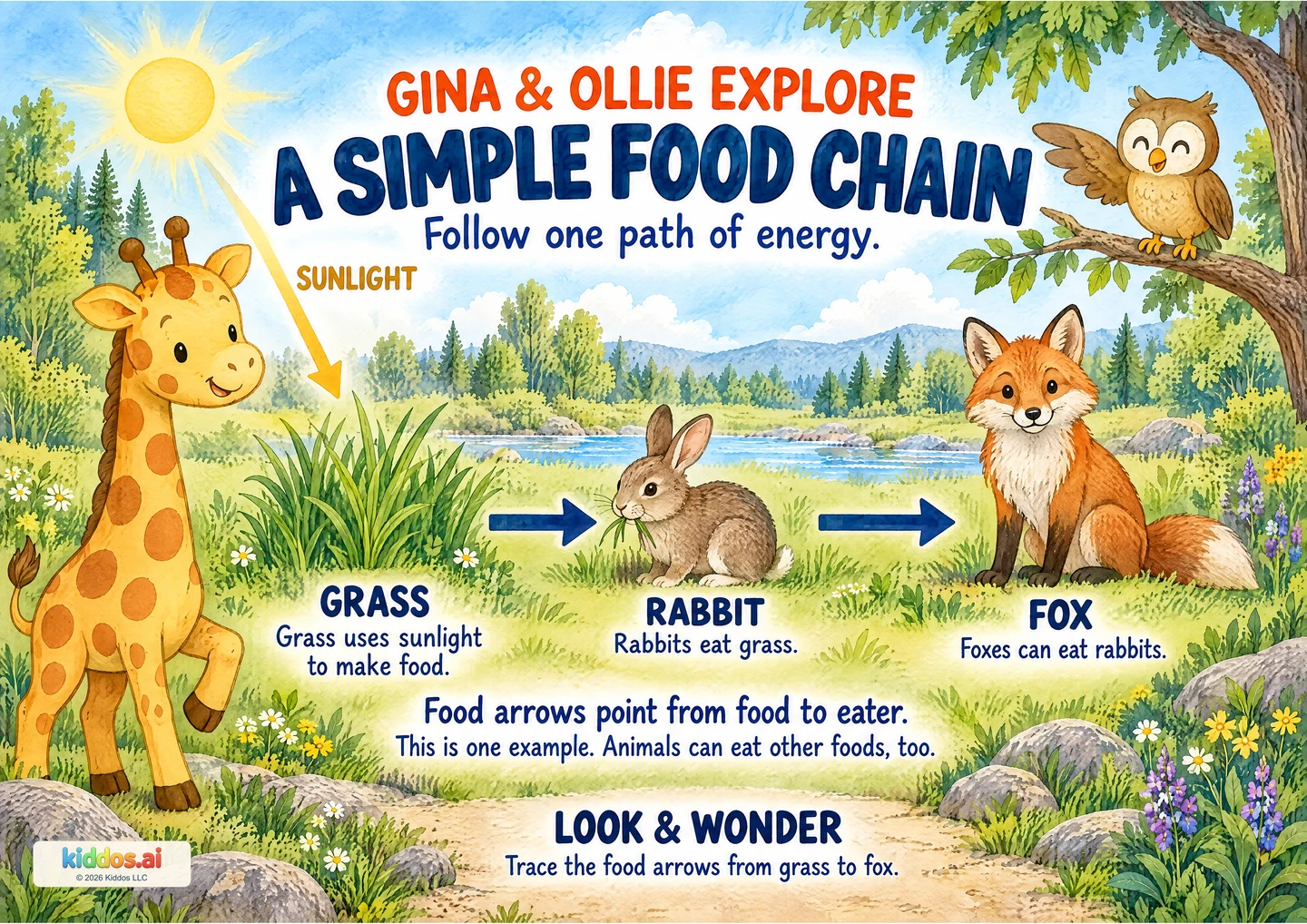
A Simple Food Chain
How do these food arrows connect the living things?
Trace the pictured food-to-eater arrows and explain one connection.
Explore this lesson
For teachers
A sequence you can adapt.
Use one core poster per short session. Begin the next session by revisiting one previous idea; offer branches as choices.
Print or display the selected poster and prepare its listed materials. Read the misconception note and answer cues. Use the companion journal for optional records.
- Animal Coverings
Compare two pictured coverings without treating them as removable clothing.
Return prompt: When we explore habitats, which needs remain important even when animals have different coverings?
- All About Insects
Count six legs attached to the middle body region and distinguish antennae from legs.
Return prompt: Compare the adult butterfly and caterpillar in the Butterfly Life Cycle poster. Which stage does our adult-insect description concern?
- A Butterfly’s Life Cycle
Put the four pictured stages in order and identify one body change.
Return prompt: Compare this cycle with the frog cycle. Name one similarity in the sequence and one difference in the pictured bodies.
- A Frog’s Life Cycle
Describe the pictured changes in legs and tail across a common pond-frog cycle.
Return prompt: Use the Habitat poster to connect the tadpole to a place with water. What need does that setting meet?
- Animal Habitats
Identify a pictured animal need and a feature that helps meet it.
Return prompt: Look at the Camouflage poster. How does the background change what is easy to notice?
- Animal Camouflage
Point to a color, pattern or outline that helps explain blending in.
Return prompt: Return to the original scene. Which clue would you offer someone else without giving away the whole discovery?
- A Simple Food Chain
Trace the pictured food-to-eater arrows and explain one connection.
Return prompt: Connect the chain to a habitat. What else does an animal need besides the food shown here?
Closing check: Ask learners to choose one animal and explain a feature, a change during growth or a habitat need using a pictured clue.
Take this journey onto paper.
The poster pack includes every lesson in this journey. The companion includes parent conversations, classroom plans and a discovery record.