Five minutes together
Look. Wonder. Talk.
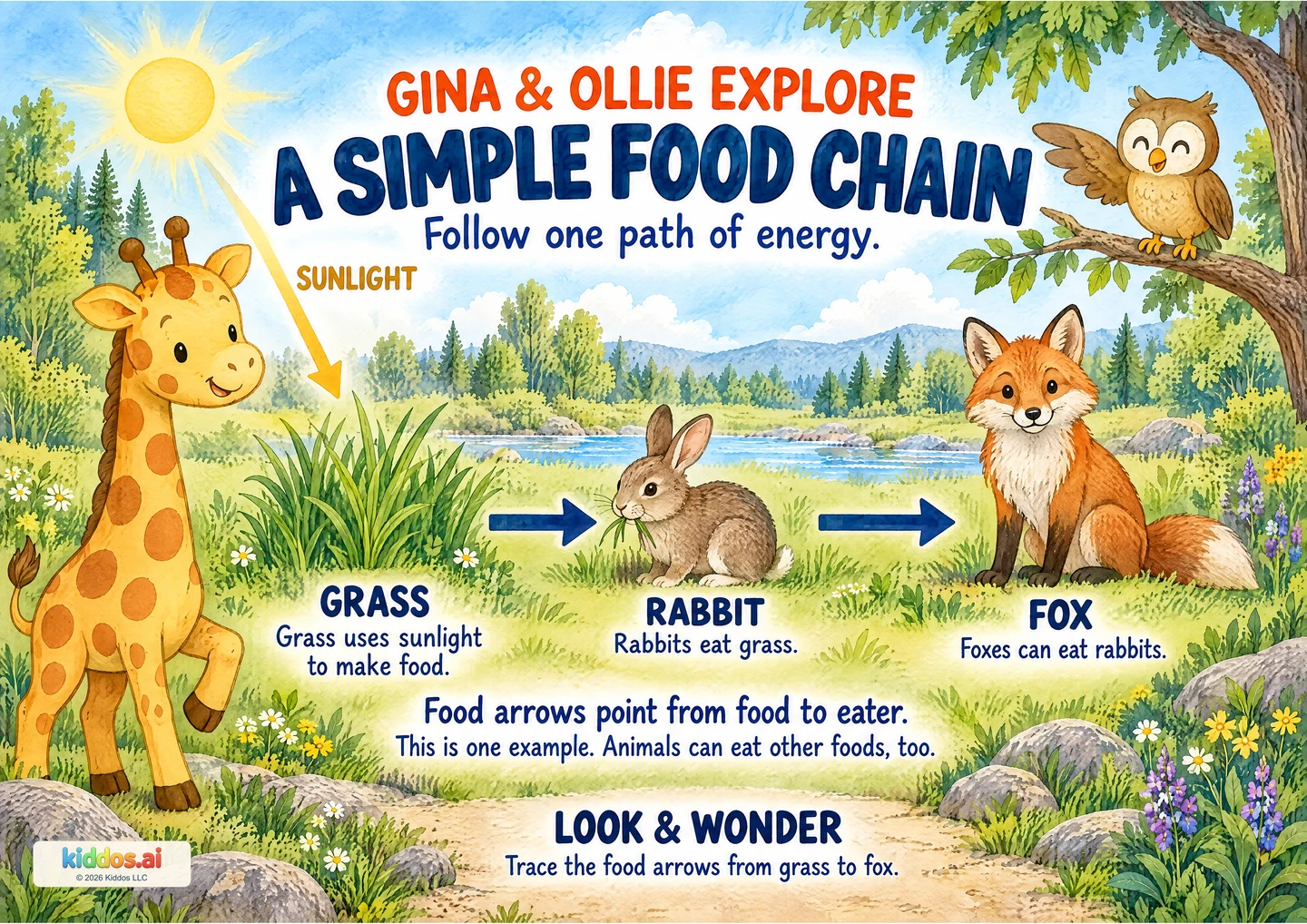
Our discovery: Trace the pictured food-to-eater arrows and explain one connection.
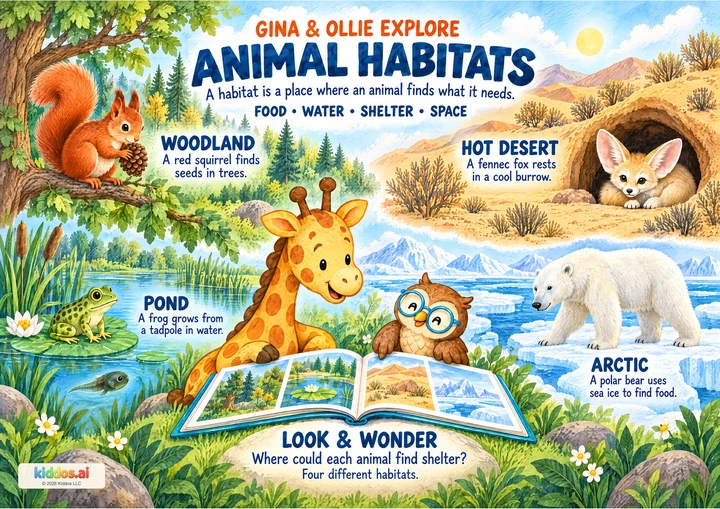
Remember: We noticed animals within their surroundings. They also need food; how can a picture show who eats what?
Revisit that discoveryBegin at the grass and look for the sunlight connection. Grass uses sunlight to make its food. Then trace the food arrows: rabbits eat grass, and foxes can eat rabbits. Each food arrow points from the food toward the eater, following energy through the chain. Let your child guide the route with a finger or words while you read. This is one example of how living things are connected, rather than a list of everything each animal eats.
Start with the grass and follow an arrow. What connection do you notice?
Start here
Find the grass and follow its arrow to the rabbit.
Explore further
Explain why this single chain does not mean a fox eats only rabbits.
Three questions to share
1What helps the grass make its food?
Answer cue: Sunlight. Follow the sunlight connection down to the grass; the grass does not eat the Sun.
2Why does the food arrow point from grass to rabbit?
Answer cue: The rabbit eats grass. Food arrows point from food to eater, following energy.
3Does the poster mean that foxes eat only rabbits?
Answer cue: No. Rabbits are one example of a fox’s food. The poster tells us that animals can eat other foods, too.
If your child is unsure: Let’s use one clue together. Find the grass and follow its arrow to the rabbit.
Something to try together
Tell the arrow story
You’ll need: The poster and an adult; optional paper and drawing materials. Describing or pointing is enough.
- Name or describe grass, rabbit and fox in the poster.
- Draw or gesture an arrow from grass to rabbit and from rabbit to fox.
- Explain each arrow as food to eater; add sunlight as what helps grass make food.
What this can show
The arrows follow energy from food to eater. The grass does not eat the Sun, and this is only one possible feeding path.
Return to it: Connect the chain to a habitat. What else does an animal need besides the food shown here?
Get the guide and discovery recordFor teachers · About 20 minutes
A small lesson with room to explore.
Learning aim: Trace the pictured food-to-eater arrows and explain one connection.
Prepare: Read the poster, answer cues and misconception note. Prepare only the materials named in the activity; keep a picture-only or described option available.
- 3 min
Reconnect and wonder
How do these food arrows connect the living things? Invite an initial idea; record it without marking it right or wrong.
- 4 min
Look together
Find the grass and follow its arrow to the rabbit. Introduce food chain using the poster.
- 8 min
Investigate or represent
Use “Tell the arrow story.” Let pairs take turns noticing and recording, with adult help and the activity’s stated boundaries.
- 5 min
Explain and return
Ask the core check: How do these food arrows connect the living things? Accept pointing, words, signing or a drawing. If the learner is ready, offer this optional extension: Explain why this single chain does not mean a fox eats only rabbits.
Check the idea together
How do these food arrows connect the living things?
What to listen for
The arrows run from grass to rabbit and rabbit to fox because they point from food to eater. Sunlight helps grass make food. The arrows follow energy from food to eater. The grass does not eat the Sun, and this is only one possible feeding path.
Accept pointing, speech, signing, a drawing or adult dictation. Describe the illustration and use labels/position as well as color. Offer one contrast first, and use the extension when the learner is ready.