Five minutes together
Look. Wonder. Talk.
Our discovery: Name two soil components and distinguish the enlarged drawing from the real ground.
Remember: Choose one comfortable way to notice or describe a detail. What do you already wonder about this picture?
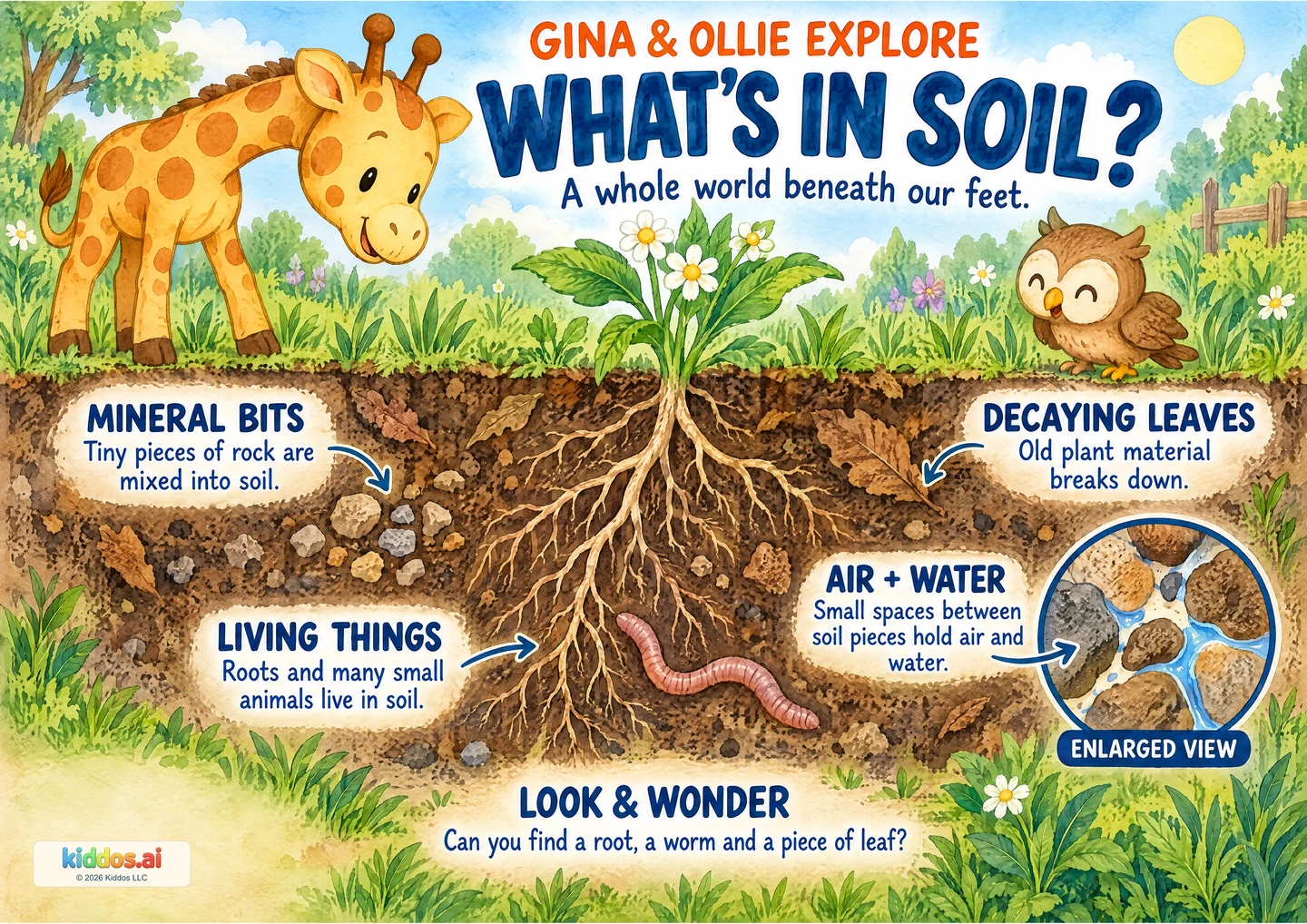
Revisit that discoveryImagine looking through the ground instead of digging it up. Invite your child to find the plant’s roots, a worm and a piece of old leaf. Soil contains mineral pieces and material from once-living things, as well as water, air and living organisms. The enlarged view helps us notice spaces between soil pieces. Some space holds water; some holds invisible air. Read one label at a time and let your child choose what to explore next.
Imagine looking beneath this plant. What would you like to explore first?
Start here
Find a root and a worm, with a clue or description if helpful.
Explore further
Compare a living root, an old leaf piece and a mineral bit. What is different about them?
Three questions to share
1Which parts of the picture are alive?
Answer cue: The plant, including its roots, and the worm are living things. The old leaf fragments are no longer alive.
2Where are air and water found in the enlarged view?
Answer cue: In spaces between soil pieces. They are not separate underground layers; air itself is invisible.
3Is soil only tiny pieces of rock? What else can you find?
Answer cue: No. The picture also shows old plant material, roots and a worm, plus spaces holding water and air.
If your child is unsure: Let’s use one clue together. Find a root and a worm, with a clue or description if helpful.
Something to try together
Make a view beneath the surface
You’ll need: The poster and an adult; optional paper and drawing materials. Describing or pointing is enough.
- Look at the poster’s surface and enlarged detail together.
- Draw or describe a plant with roots below it; add old leaf pieces and spaces between soil pieces.
- Explain which parts came from the picture and which details you imagined. No digging or collecting is needed.
What this can show
The drawing is a model. Air and water occupy spaces, not neat separate layers below the soil.
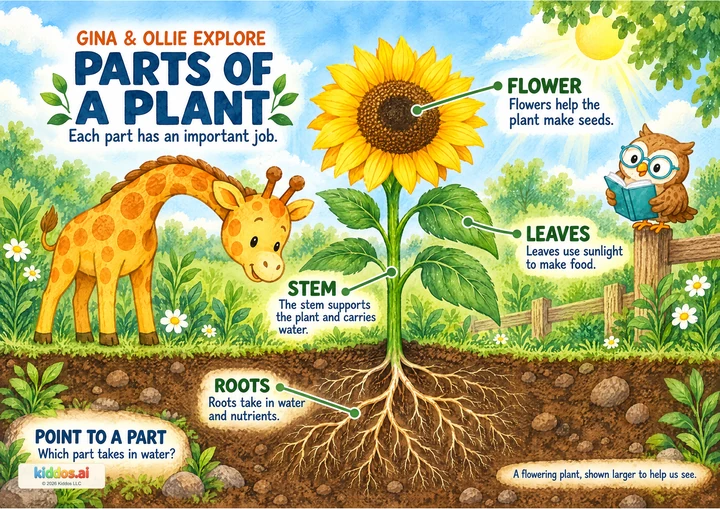
Return to it: Look back at your model after the Plant Parts lesson. What job could you add beside the roots?
Get the guide and discovery recordFor teachers · About 20 minutes
A small lesson with room to explore.
Learning aim: Name two soil components and distinguish the enlarged drawing from the real ground.
Prepare: Read the poster, answer cues and misconception note. Prepare only the materials named in the activity; keep a picture-only or described option available.
- 3 min
Reconnect and wonder
What could we find beneath a plant? Invite an initial idea; record it without marking it right or wrong.
- 4 min
Look together
Find a root and a worm, with a clue or description if helpful. Introduce soil using the poster.
- 8 min
Investigate or represent
Use “Make a view beneath the surface.” Let pairs take turns noticing and recording, with adult help and the activity’s stated boundaries.
- 5 min
Explain and return
Ask the core check: What could we find beneath a plant? Accept pointing, words, signing or a drawing. If the learner is ready, offer this optional extension: Compare a living root, an old leaf piece and a mineral bit. What is different about them?
Check the idea together
What could we find beneath a plant?
What to listen for
The pictured soil contains mineral pieces, old leaf material, living roots and a worm, with air and water in spaces between pieces. The drawing is a model. Air and water occupy spaces, not neat separate layers below the soil.
Accept pointing, speech, signing, a drawing or adult dictation. Describe the illustration and use labels/position as well as color. Offer one contrast first, and use the extension when the learner is ready.