

A Gina & Ollie learning journey
A garden grows
How can one seed lead to more seeds?
Begin beneath a plant, learn the jobs of its parts, then follow growth, flower visits and new seed journeys.
Begin the journeyAt your own pace.
Keep one dated plant-observation page over several weeks. A familiar plant photograph can stand in for a living plant. Do not promise a full life cycle within a fixed number of days.
A discovery to listen for.
Invite learners to retell a seed-to-seed journey and explain where roots, flowers, pollinators and seed movement belong. Accept a drawing, pointing sequence or dictated story.
- 1
Start here
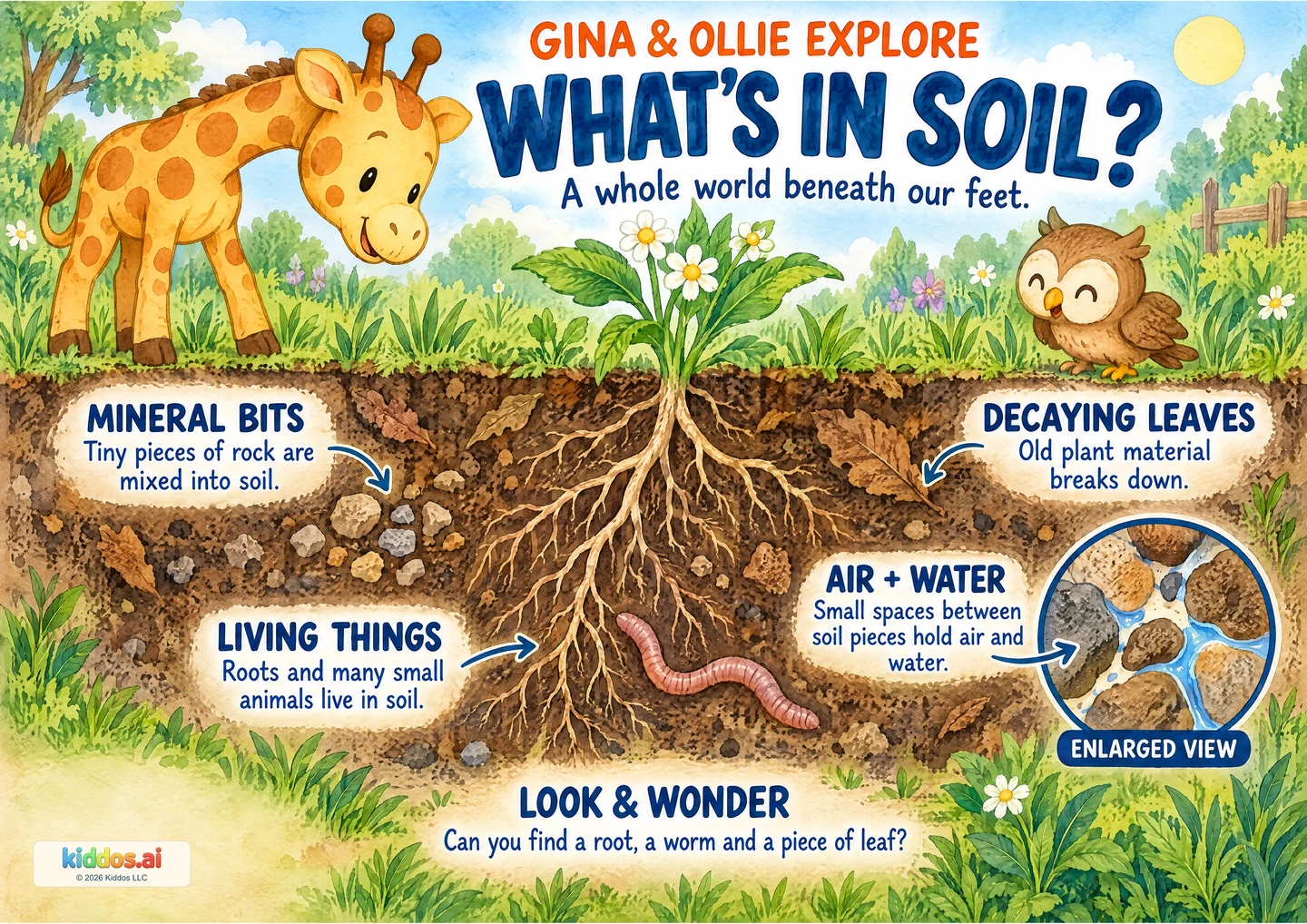
What’s in Soil?
What could we find beneath a plant?
Name two soil components and distinguish the enlarged drawing from the real ground.
Explore this lesson - 2
Build on your last discovery
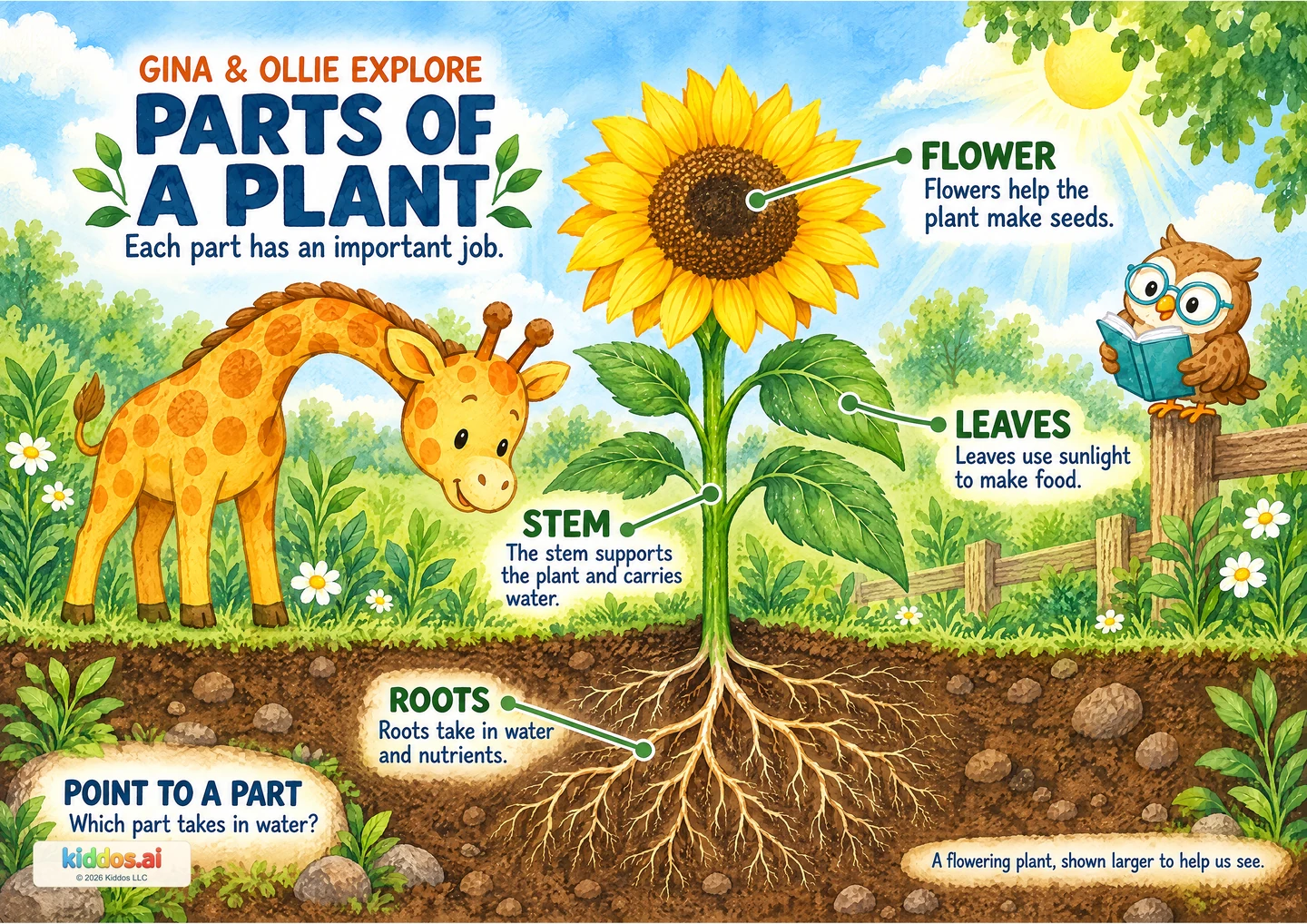
Parts of a Plant
How do a plant’s parts help it live and grow?
Connect a root, stem or leaf to its pictured job.
Explore this lesson - 3
Build on your last discovery
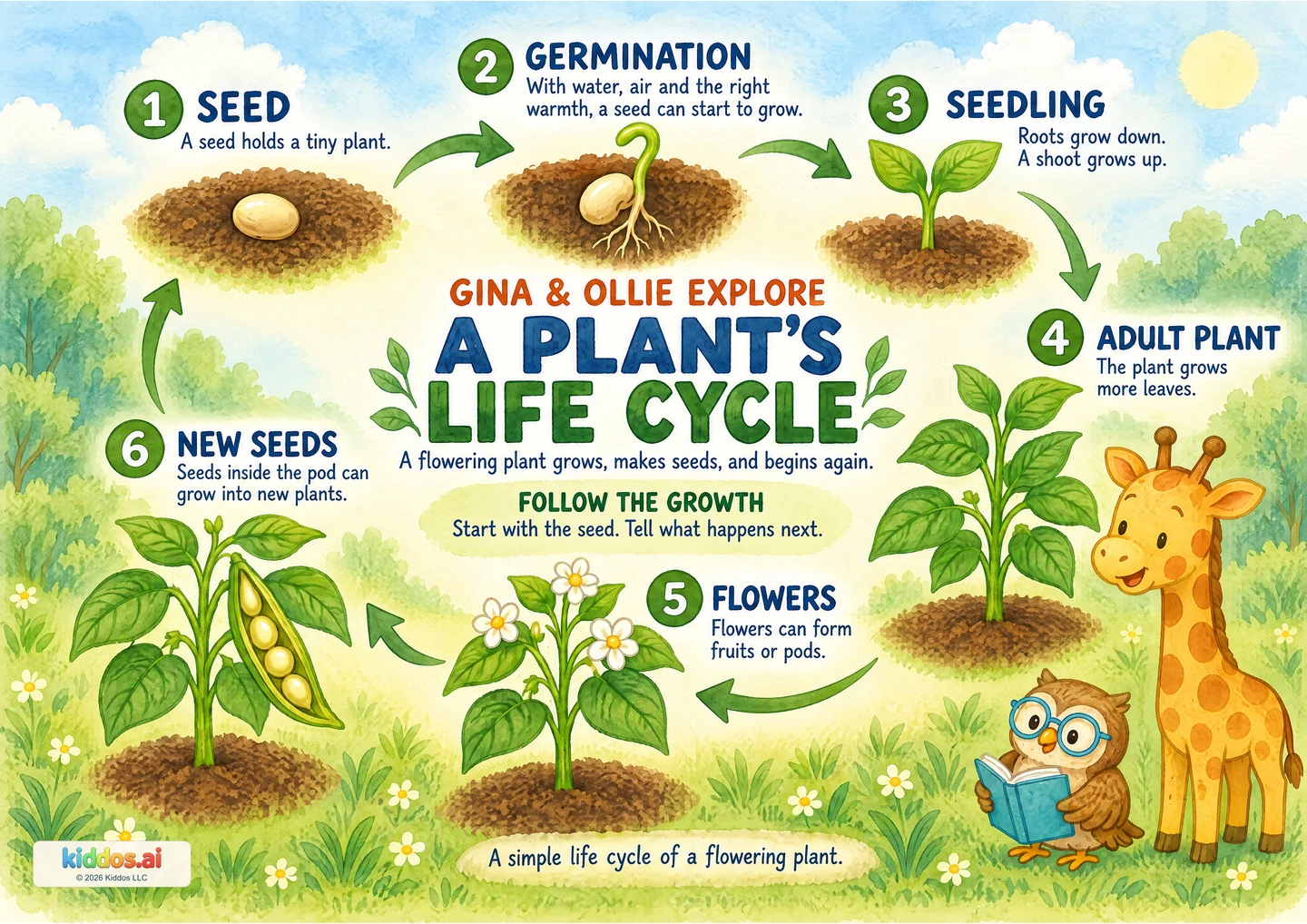
A Plant’s Life Cycle
How can one seed lead to more seeds?
Sequence the pictured stages and explain why the cycle can begin again.
Explore this lesson - 4
Build on your last discovery
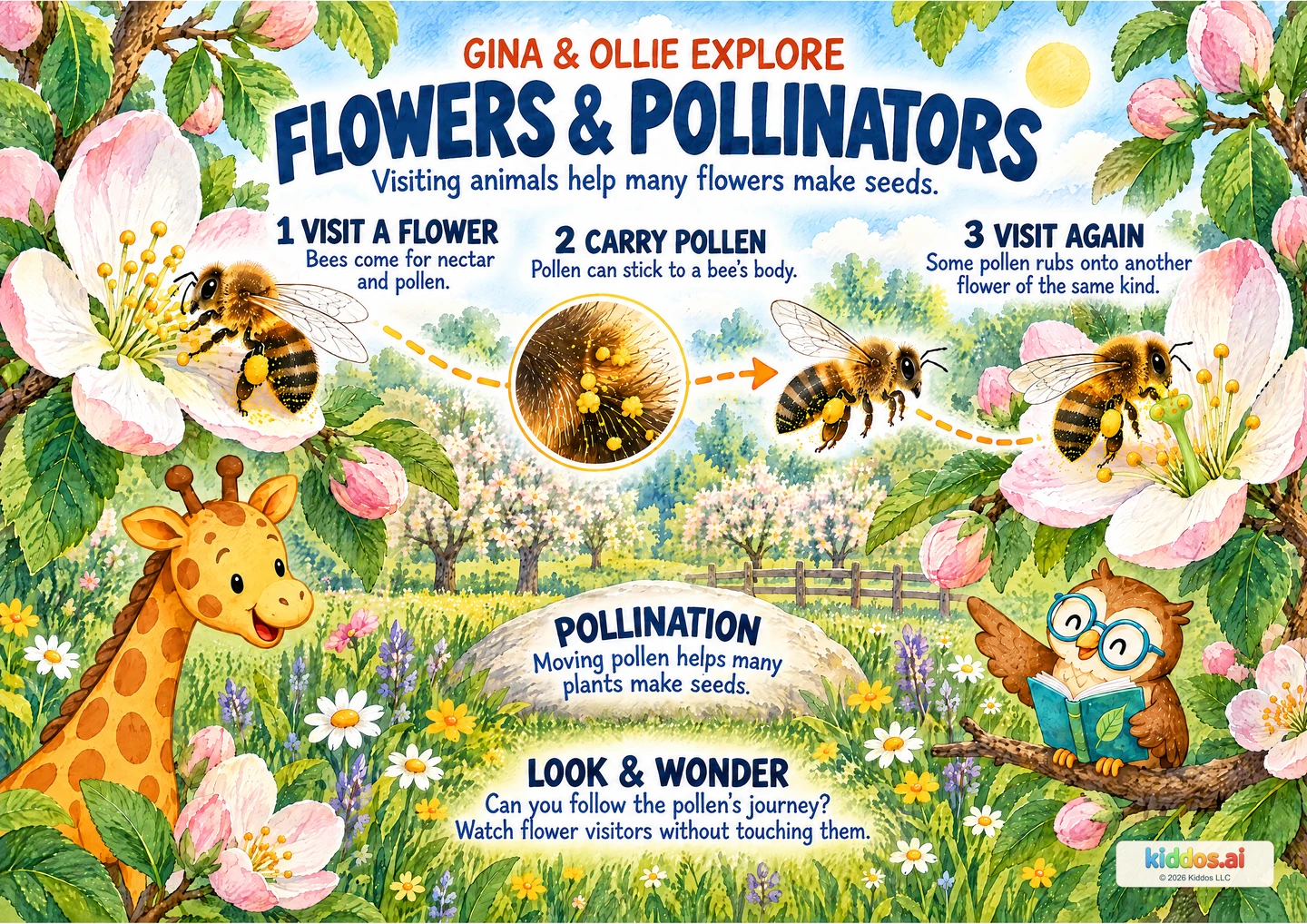
Busy Bees and Pollination
How can a flower visitor help a plant make seeds?
Trace pollen moving between flowers of the same kind.
Explore this lesson - 5
Build on your last discovery
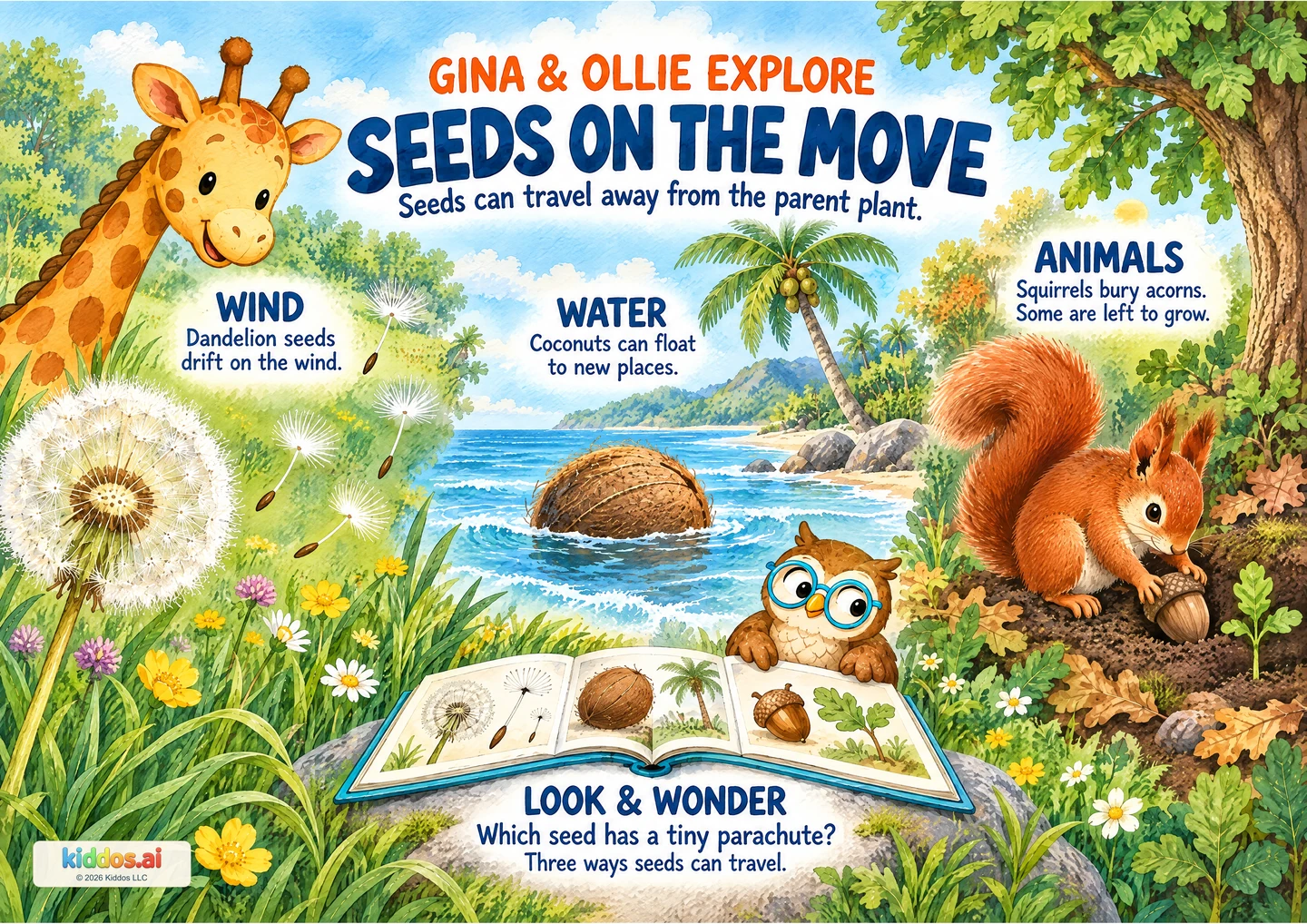
Seeds on the Move
How might a seed reach a new place?
Match each named seed example to wind, water or an animal.
Explore this lesson
For teachers
A sequence you can adapt.
Use one core poster per short session. Begin the next session by revisiting one previous idea; offer branches as choices.
Print or display the selected poster and prepare its listed materials. Read the misconception note and answer cues. Use the companion journal for optional records.
- What’s in Soil?
Name two soil components and distinguish the enlarged drawing from the real ground.
Return prompt: Look back at your model after the Plant Parts lesson. What job could you add beside the roots?
- Parts of a Plant
Connect a root, stem or leaf to its pictured job.
Return prompt: When we look at a seedling next, which of these parts can we already recognize?
- A Plant’s Life Cycle
Sequence the pictured stages and explain why the cycle can begin again.
Return prompt: Choose a familiar growing plant to observe with an adult on different days. Record the date and what you actually see; do not expect a complete life cycle in a week.
- Busy Bees and Pollination
Trace pollen moving between flowers of the same kind.
Return prompt: Return to the Plant Life Cycle picture. Where does this flower visit fit in the longer story?
- Seeds on the Move
Match each named seed example to wind, water or an animal.
Return prompt: Look back at your seed journey. What would need to happen for a new plant to begin growing?
Closing check: Invite learners to retell a seed-to-seed journey and explain where roots, flowers, pollinators and seed movement belong. Accept a drawing, pointing sequence or dictated story.
Take this journey onto paper.
The poster pack includes every lesson in this journey. The companion includes parent conversations, classroom plans and a discovery record.