

A Gina & Ollie learning journey
Water and weather
What changes outside, and what can we notice?
Recognize water’s forms, follow a water journey, record nearby weather and look for longer seasonal patterns.
Begin the journeyAt your own pace.
Keep short weather records on different days. Seasonal observations need weeks or months; choose the rhythm that fits your location and classroom.
A discovery to listen for.
Invite a child to separate an observation from an explanation: what did we see, and what idea helps us explain it?
- 1
Start here
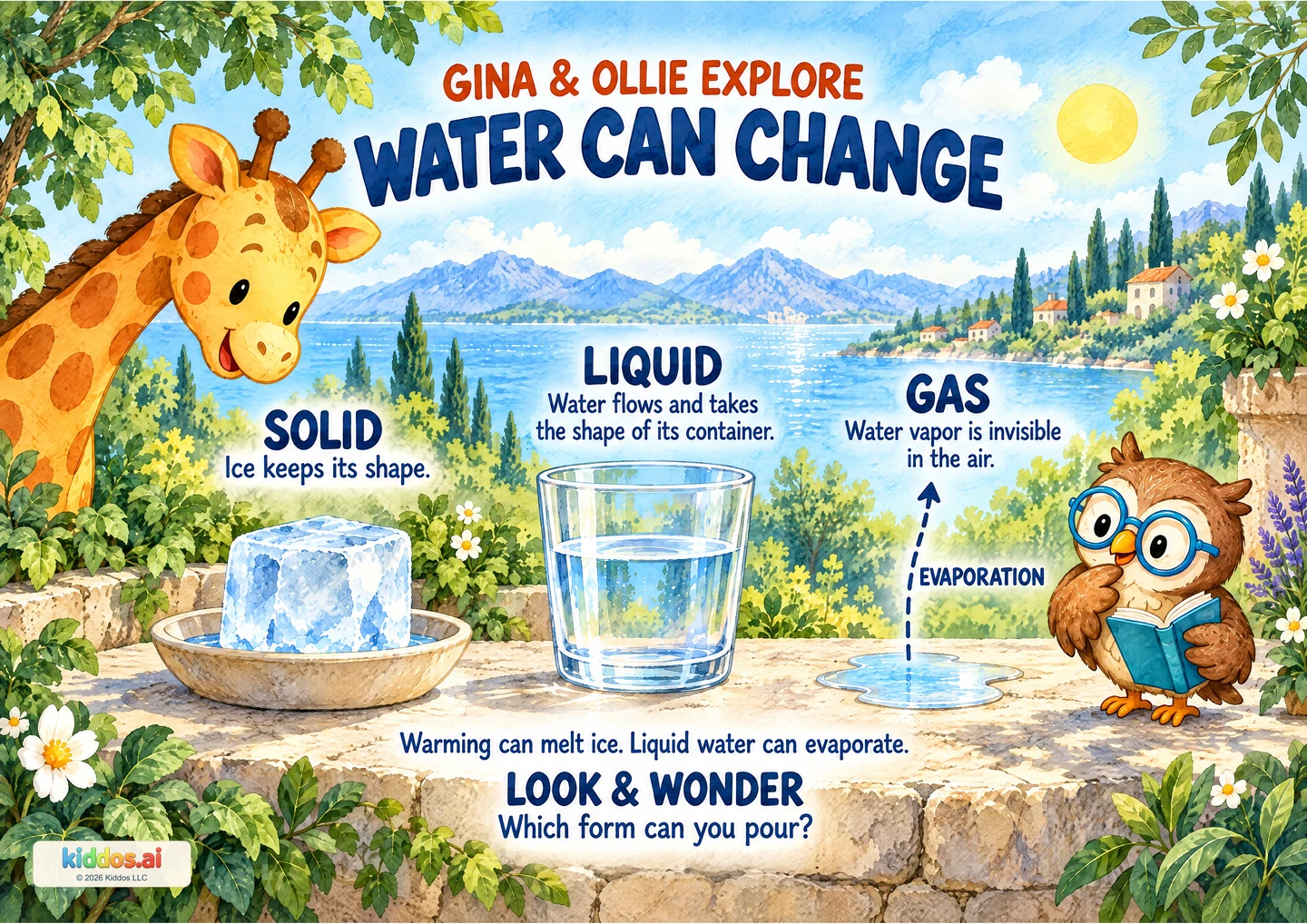
Water Can Change
How can the same water look and behave differently?
Distinguish ice, liquid water and invisible water vapor.
Explore this lesson - 2
Build on your last discovery
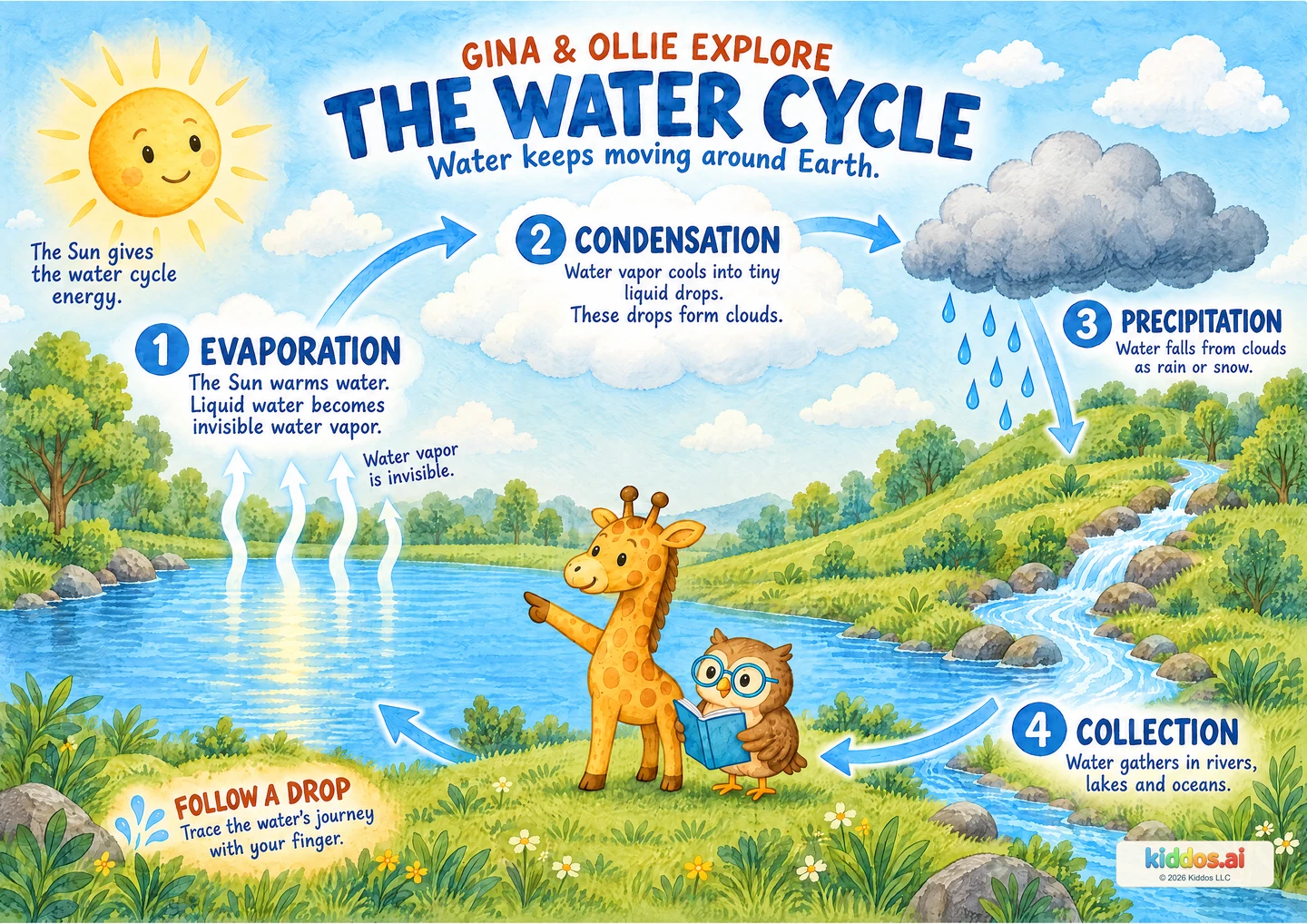
The Water Cycle
Where can water go after a puddle gets smaller?
Describe a pictured water journey while distinguishing diagram symbols from visible water.
Explore this lesson - 3
Build on your last discovery
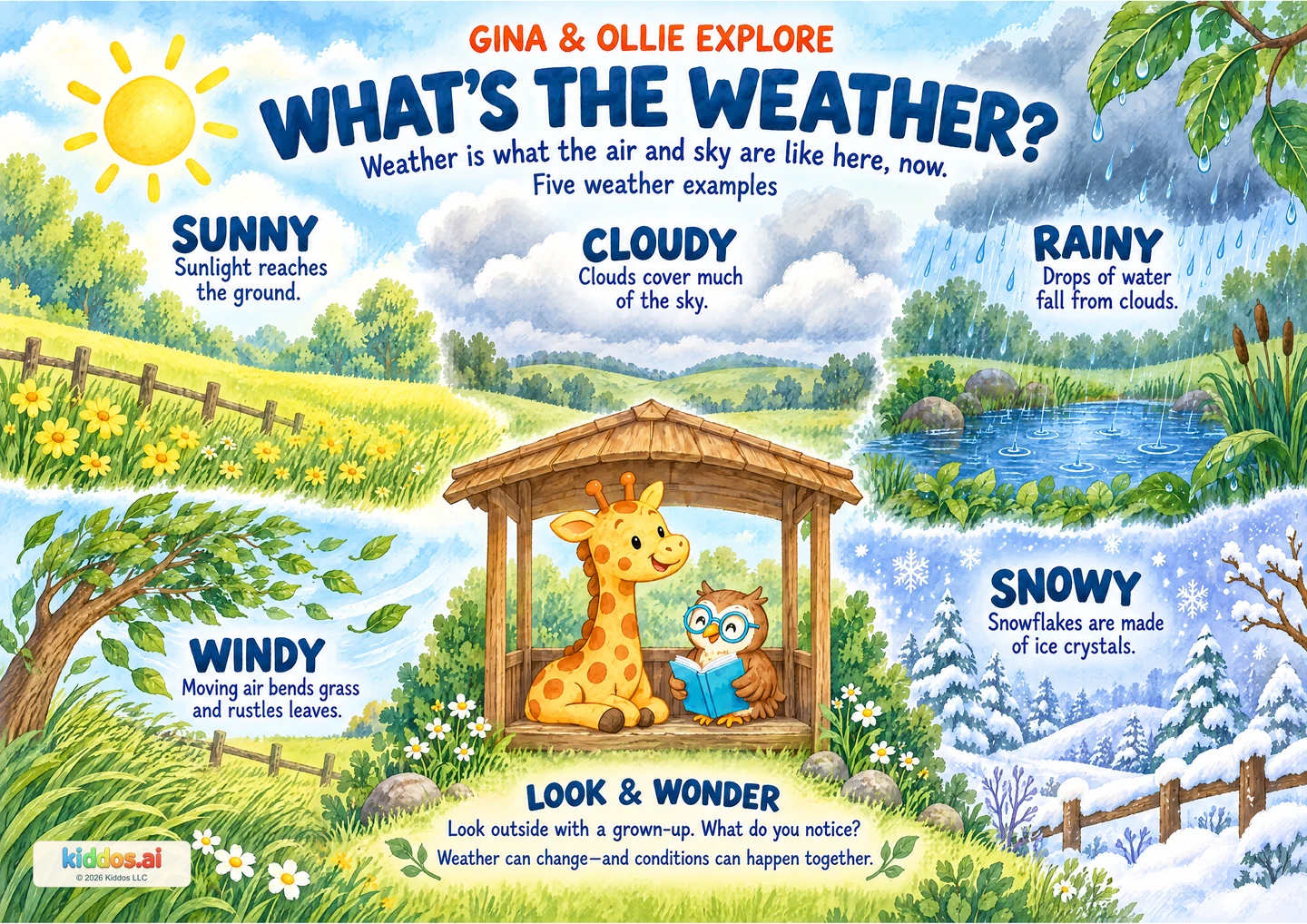
What Is the Weather?
What is the weather like here, now?
Use observed clues to describe weather, including overlapping conditions.
Explore this lesson - 4
Build on your last discovery
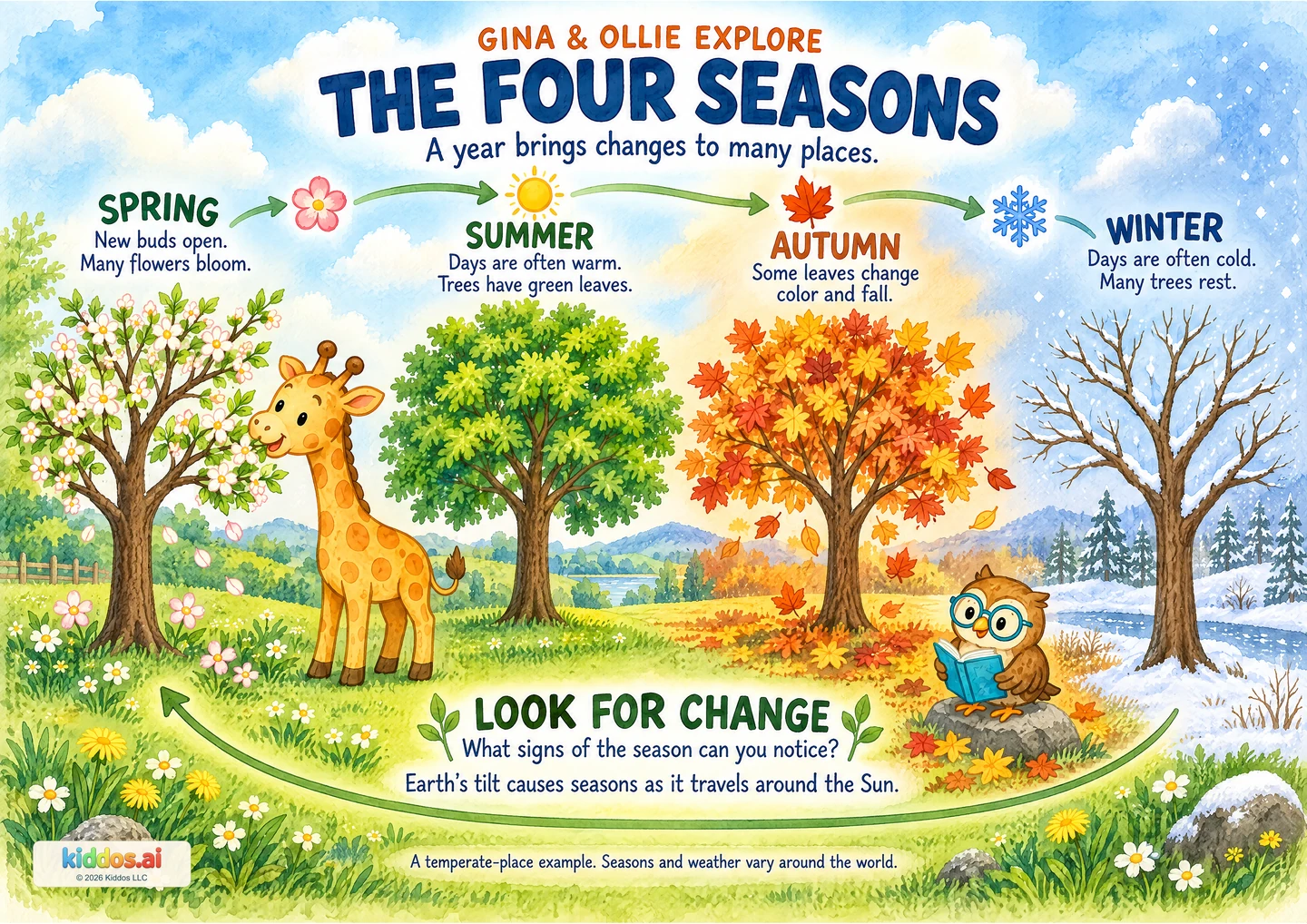
The Four Seasons
What changes can we notice over a longer part of the year?
Compare a local observation with the poster’s temperate-place examples.
Explore this lesson
For teachers
A sequence you can adapt.
Use one core poster per short session. Begin the next session by revisiting one previous idea; offer branches as choices.
Print or display the selected poster and prepare its listed materials. Read the misconception note and answer cues. Use the companion journal for optional records.
- Water Can Change
Distinguish ice, liquid water and invisible water vapor.
Return prompt: Where does liquid water appear in the Water Cycle poster? How is its gas form represented?
- The Water Cycle
Describe a pictured water journey while distinguishing diagram symbols from visible water.
Return prompt: On a later safe window look, notice clouds or rain. Which part of the diagram helps you talk about that observation?
- What Is the Weather?
Use observed clues to describe weather, including overlapping conditions.
Return prompt: Which condition changed across your visits, and which appeared more than once?
- The Four Seasons
Compare a local observation with the poster’s temperate-place examples.
Return prompt: What can our record tell us so far, and what would need more time?
Closing check: Invite a child to separate an observation from an explanation: what did we see, and what idea helps us explain it?
Take this journey onto paper.
The poster pack includes every lesson in this journey. The companion includes parent conversations, classroom plans and a discovery record.