Five minutes together
Look. Wonder. Talk.
Our discovery: Compare a local observation with the poster’s temperate-place examples.
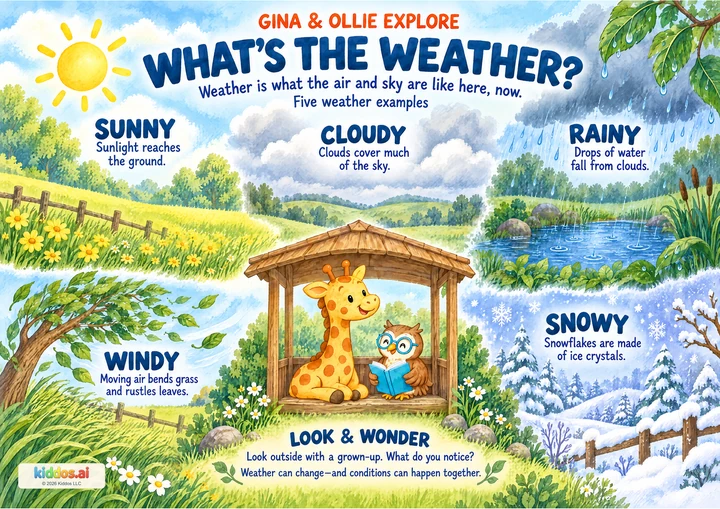
Remember: We recorded what the weather was like on different days. What might a much longer record help us notice?
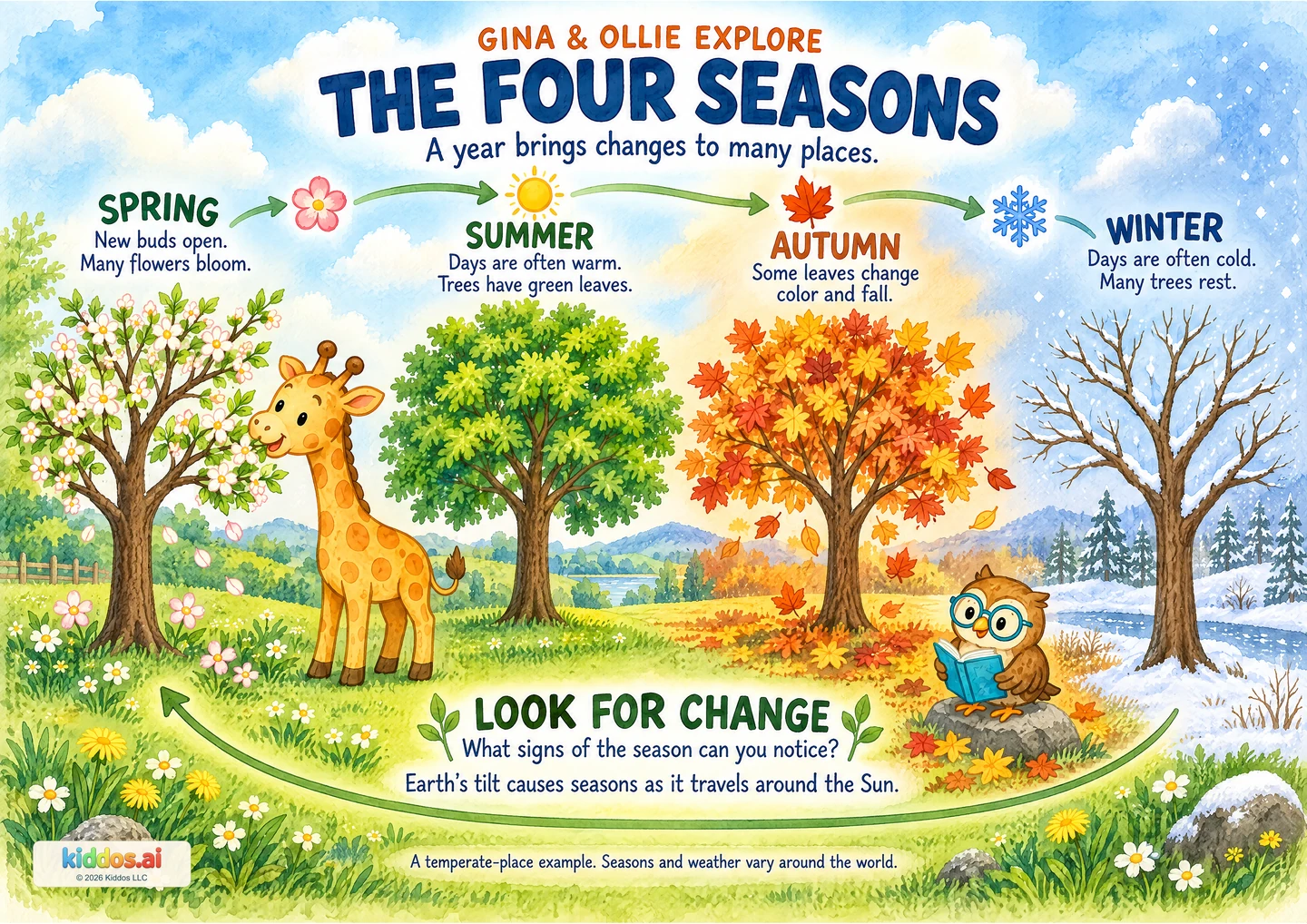
Revisit that discoveryRead the season names and invite your child to find a clue in each scene. This poster shows a temperate-season example, so compare rather than expect an exact match to your home. Explain simply that Earth’s tilt causes seasons as Earth travels around the Sun. Let a local observation lead the conversation.
Which scene reminds you of a place you know? What is similar or different?
Start here
Choose one seasonal picture and describe a detail.
Explore further
Explain why our local season might look different from the illustration.
Three questions to share
1What clue suggests spring in this picture?
Answer cue: New buds or new growth.
2Which pictured changes have you noticed near home?
Answer cue: Accept the child’s observations, including differences from the poster.
3Does winter always mean snow everywhere?
Answer cue: No. Seasonal weather and signs vary by location.
If your child is unsure: Let’s use one clue together. Choose one seasonal picture and describe a detail.
Something to try together
Return to one view
You’ll need: The poster and an adult; optional paper and drawing materials. Describing or pointing is enough.
- Choose a familiar safe window view or adult-provided photograph.
- Record the date and one detail, such as leaves, flowers or clothing people choose.
- Revisit over coming weeks or months; compare with the earlier record and with the poster.
What this can show
A few days of weather do not establish a season. Seasons and their signs vary by place; snow and leaf loss are not universal.
Return to it: What can our record tell us so far, and what would need more time?
Get the guide and discovery recordFor teachers · About 20 minutes
A small lesson with room to explore.
Learning aim: Compare a local observation with the poster’s temperate-place examples.
Prepare: Read the poster, answer cues and misconception note. Prepare only the materials named in the activity; keep a picture-only or described option available.
- 3 min
Reconnect and wonder
What changes can we notice over a longer part of the year? Invite an initial idea; record it without marking it right or wrong.
- 4 min
Look together
Choose one seasonal picture and describe a detail. Introduce season using the poster.
- 8 min
Investigate or represent
Use “Return to one view.” Let pairs take turns noticing and recording, with adult help and the activity’s stated boundaries.
- 5 min
Explain and return
Ask the core check: What changes can we notice over a longer part of the year? Accept pointing, words, signing or a drawing. If the learner is ready, offer this optional extension: Explain why our local season might look different from the illustration.
Check the idea together
What changes can we notice over a longer part of the year?
What to listen for
A learner can describe a real change over time and compare it with a pictured seasonal example. Local signs may differ from the poster, and a few days cannot establish a seasonal pattern. A few days of weather do not establish a season. Seasons and their signs vary by place; snow and leaf loss are not universal.
Accept pointing, speech, signing, a drawing or adult dictation. Describe the illustration and use labels/position as well as color. Offer one contrast first, and use the extension when the learner is ready.