From story to discovery
Try it together.
What could come first?
Gather
One clean cloth, one empty plastic plate and one large spoon. A stable clear surface or clean floor mat.
Adult setup — read before trying
Set the folded cloth, plate and spoon separately within comfortable reach. Adult selects large safe materials and a stable reachable surface. No glass, sharp objects, small loose parts, blindfolds or climbing. Pointing, showing and directing an adult are welcome; no speed test or required spoken response.
- Set the folded cloth, plate and spoon separately within comfortable reach.
- Explain the plan: cloth underneath, plate on the cloth, spoon on the plate.
- First, spread the cloth. Pause and show what changed.
- Next, put the plate on the cloth. Last, place the spoon on the plate.
- Point to the finished setup and retell the three steps with first, next and last.
- Swap roles. Child directs the grown-up, using words, gestures or pointing. They may choose another safe arrangement and explain their own order.
- Keep the same
- same three objects; same clearing and camera for the steps.
- What changes
- Cloth is unfolded, then plate and spoon are placed in the stated order.
- Look for
- Benny’s shown plan is: first spread the cloth; next put the plate on the cloth; last put the spoon on the plate. This describes his chosen simple order, not the only physically possible way to arrange the objects.
Make sense of what happened
Use first, next and last to follow and retell a three-step setup. Benny’s shown plan is: first spread the cloth; next put the plate on the cloth; last put the spoon on the plate. This describes his chosen simple order, not the only physically possible way to arrange the objects.
This is Benny’s chosen workable order, not the only possible plan. Welcome another safe order when the child can show how it works.
Full grown-up notes, setup details & honest limits
Pause after each action and let the child tell or show what comes next.
This is Benny’s chosen workable order, not the only possible plan. Welcome another safe order when the child can show how it works.
These are shared activities inspired by Benny’s story world. Suggested ages and times are editorial starting points; they are not standardized assessments or measured learning outcomes.
A conversation, not a quiz
Leave room for their idea.
Pause after each action and let the child tell or show what comes next.
What did Benny do first?
A cue for the grown-up
He spread the cloth.
What happened after the plate was placed?
A cue for the grown-up
He added the spoon to the plate.
Could someone choose another workable plan?
A cue for the grown-up
Yes. This is Benny’s clear three-step plan; explain and check a different one instead of calling every alternative wrong.
A simple way in
Model one step at a time with the real objects. The child can indicate the next object rather than remember all three steps.
Another thing to notice
Retell a familiar routine in three steps, or have the child invent a safe new arrangement and direct you through it. Ask whether a changed order still works.
Come back to it
Return to the game another day with one adult-approved change. Ask which clue or checking method helped this time.
For teachers
A small-group discovery.
Flexible 15-minute small-group sequence; prepare materials first, and shorten or pause as needed.
Prepare the named materials and adult setup above. One adult-led demonstration is a useful option.
- 2 min
Notice
Introduce the question and invite a first idea.
- 4 min
Read and compare
Read the clues and pause before the reveal; compare together.
- 6 min
Try together
Model the household game, then let pairs take turns with adult-selected objects.
- 3 min
Show your thinking
Retell or demonstrate the shown cloth–plate–spoon order, using words, pointing or an adult helper. Accept pointing, showing or directing an adult; an informal observation, not a score.
What to listen for
Retell or demonstrate the shown cloth–plate–spoon order, using words, pointing or an adult helper.
Answer guidance
Benny’s shown plan is: first spread the cloth; next put the plate on the cloth; last put the spoon on the plate. This describes his chosen simple order, not the only physically possible way to arrange the objects.
Ways to take part
Accept pointing, showing, words in a home language or directing an adult. Model one step at a time with the real objects. The child can indicate the next object rather than remember all three steps.
Record an observation with a drawing, a gesture described by an adult or a sentence. No timed performance or winning prediction is needed.
All the story words.
Read aloud, enlarge the browser text, or use this text alongside the pictures.
Page 1 · First. Next. Ready.
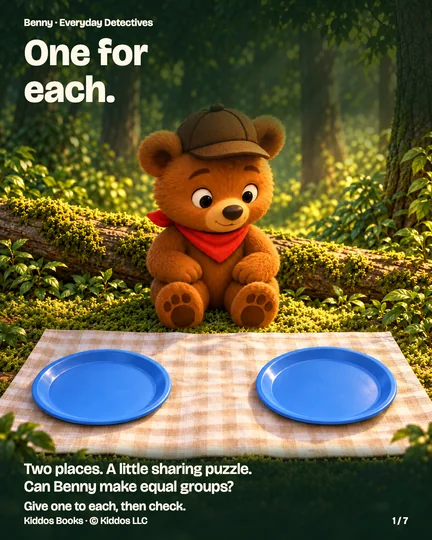
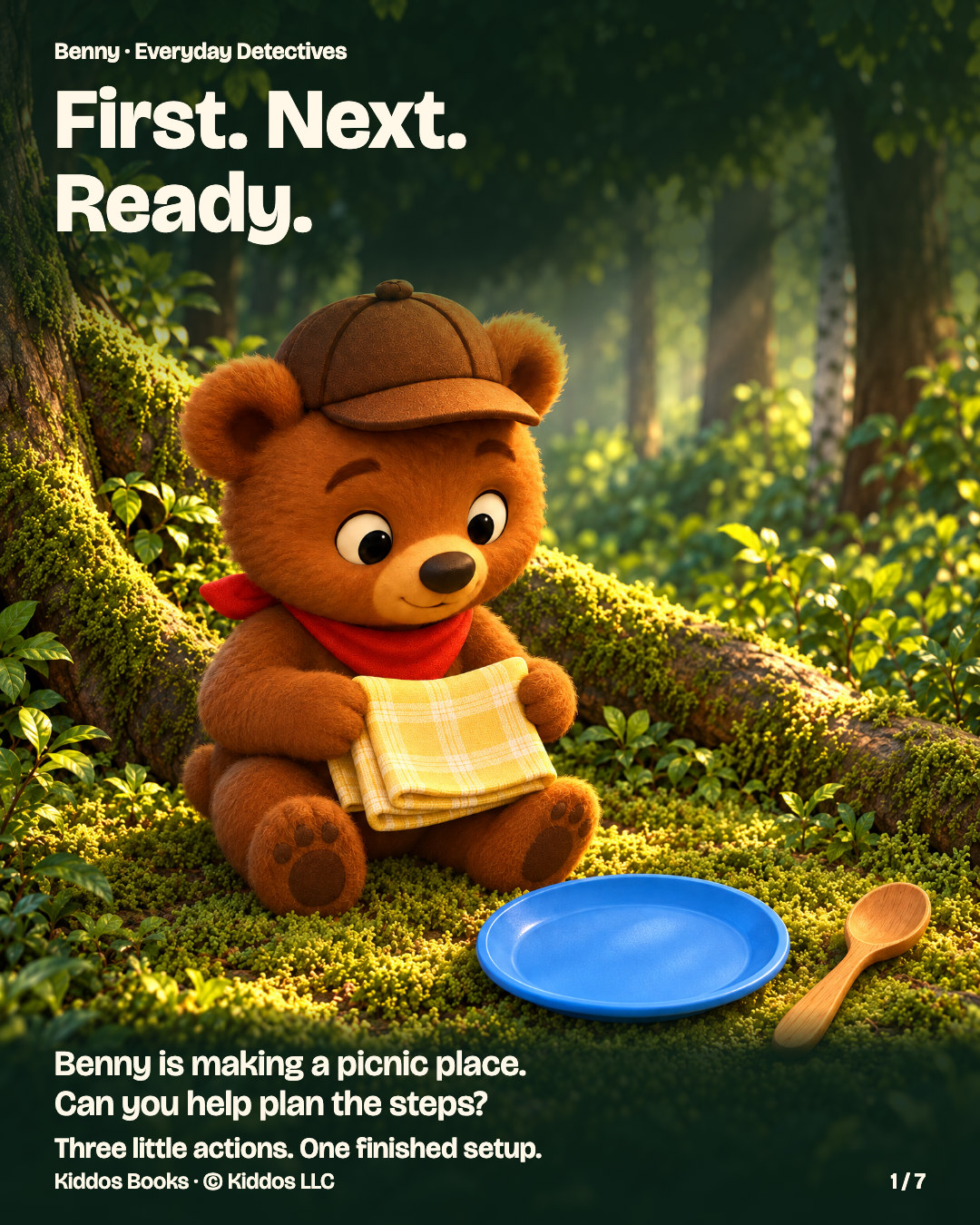
Benny · Everyday Detectives First. Next. Ready. Benny is making a picnic place. Can you help plan the steps? Three little actions. One finished setup. Kiddos Books · © Kiddos LLC 1 / 7
Picture description: Page 1 of 7. Benny holds a folded pale-yellow cloth in his lap, with a blue plastic plate and wooden spoon beside him in a forest picnic nook. Text: First. Next. Ready. Benny is making a picnic place. Can you help plan the steps? Three little actions. One finished setup.
Page 2 · What could come first?
01 / MAKE A PLAN What could come first? Cloth underneath. Plate on cloth. Spoon on plate. That is our plan. Which thing would you start with? Kiddos Books · © Kiddos LLC 2 / 7
Picture description: Page 2 of 7. A folded pale-yellow cloth, empty blue plate and wooden spoon lie separately on the moss before Benny. Nothing is stacked. Text: What could come first? Cloth underneath. Plate on cloth. Spoon on plate. That is our plan. Which thing would you start with?
Page 3 · Spread the cloth.
02 / FIRST Spread the cloth. Benny starts with the bottom layer. The plate and spoon wait beside it. What would you put on next? Kiddos Books · © Kiddos LLC 3 / 7
Picture description: Page 3 of 7. The pale-yellow cloth is spread flat. The plate and spoon still wait separately on the moss beside it. Benny rests his paws away from the objects. Text: Spread the cloth. Benny starts with the bottom layer. The plate and spoon wait beside it. What would you put on next?
Page 4 · Plate. Then spoon.
03 / NEXT, THEN LAST Plate. Then spoon. Next, put the plate on the cloth. Last, put the spoon on the plate. The picnic place is ready. Kiddos Books · © Kiddos LLC 4 / 7
Picture description: Page 4 of 7. The blue plate now rests on the spread cloth, and the wooden spoon rests on the plate. No extra objects remain beside the setup. Text: Plate. Then spoon. Next, put the plate on the cloth. Last, put the spoon on the plate. The picnic place is ready.
Page 5 · Tell the steps in order.
FIRST NEXT → LAST 04 / REMEMBER Tell the steps in order. First, cloth. Next, plate. Last, spoon. This is the plan Benny followed. Small steps make a whole plan. Kiddos Books · © Kiddos LLC 5 / 7
Picture description: Page 5 of 7. Exact detail views show the spread cloth first, then the completed cloth, plate and spoon arrangement. The words identify next and last within the completed view. Text: Tell the steps in order. First, cloth. Next, plate. Last, spoon. This is the plan Benny followed. Small steps make a whole plan.
Page 6 · Set a little place at home.
05 / TRY IT TOGETHER Set a little place at home. Adult: choose a cloth, plastic plate and one large spoon. Child, set them out in three steps. Tell what is first, next, and last. Point, show, or direct a grown-up. Kiddos Books · © Kiddos LLC 6 / 7
Picture description: Page 6 of 7. Benny sits beside a blue plate on a pale-yellow cloth, with the wooden spoon waiting beside the plate on the cloth for the final step. Text: Set a little place at home. Adult: choose a cloth, plastic plate and one large spoon. Child, set them out in three steps. Tell what is first, next, and last. Point, show, or direct a grown-up.
Page 7 · You plan. We follow.
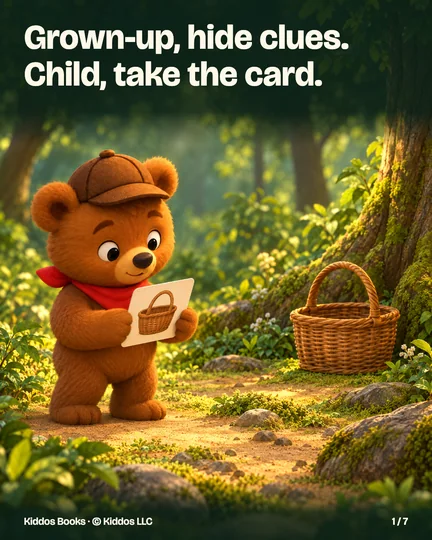
06 / YOUR TURN TO LEAD You plan. We follow. Child, tell or show each step. Grown-up, follow the plan. Swap roles and try a new setup. Small steps make a whole plan. Kiddos Books · © Kiddos LLC 7 / 7
Picture description: Page 7 of 7. The opening picnic materials return as the child is invited to direct the grown-up through a plan. Text: You plan. We follow. Child, tell or show each step. Grown-up, follow the plan. Swap roles and try a new setup. Small steps make a whole plan.
Where the explanation comes from.
Related storybooks invite further reading. The factual sources below support the investigation; illustration diagrams simplify what happens.